NELLY BONNAND
Nelly Bonnand — ceramicist. Atelier Les Trois Tilleuls, Bénivay‑Ollon, France.
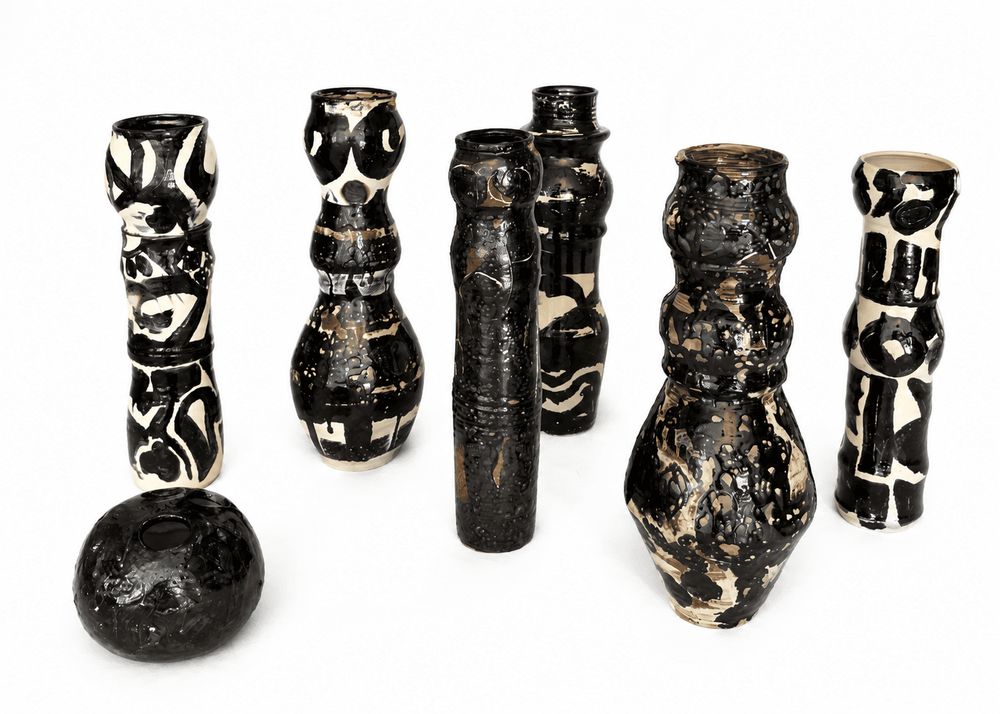
A ceramics of gesture, conceived like a painting
For sixty years, Nelly Bonnand has thrown, painted and sculpted clay in her studio in the Drôme provençale. Trained at the École nationale d'art décoratif in Nice and then at the École nationale supérieure des Beaux-Arts in Paris, she has built a body of work that runs through function — vases, teapots, plates — without ever being confined to it. This conceptual ensemble is one example: six bowling-pin vases with pinched silhouettes, gathered around a ball-shaped vase, form a game of bowling reimagined as a ceramic piece — the function of the vase placed in service of a form conceived, above all, as an object to look at. View the work →01
Biography
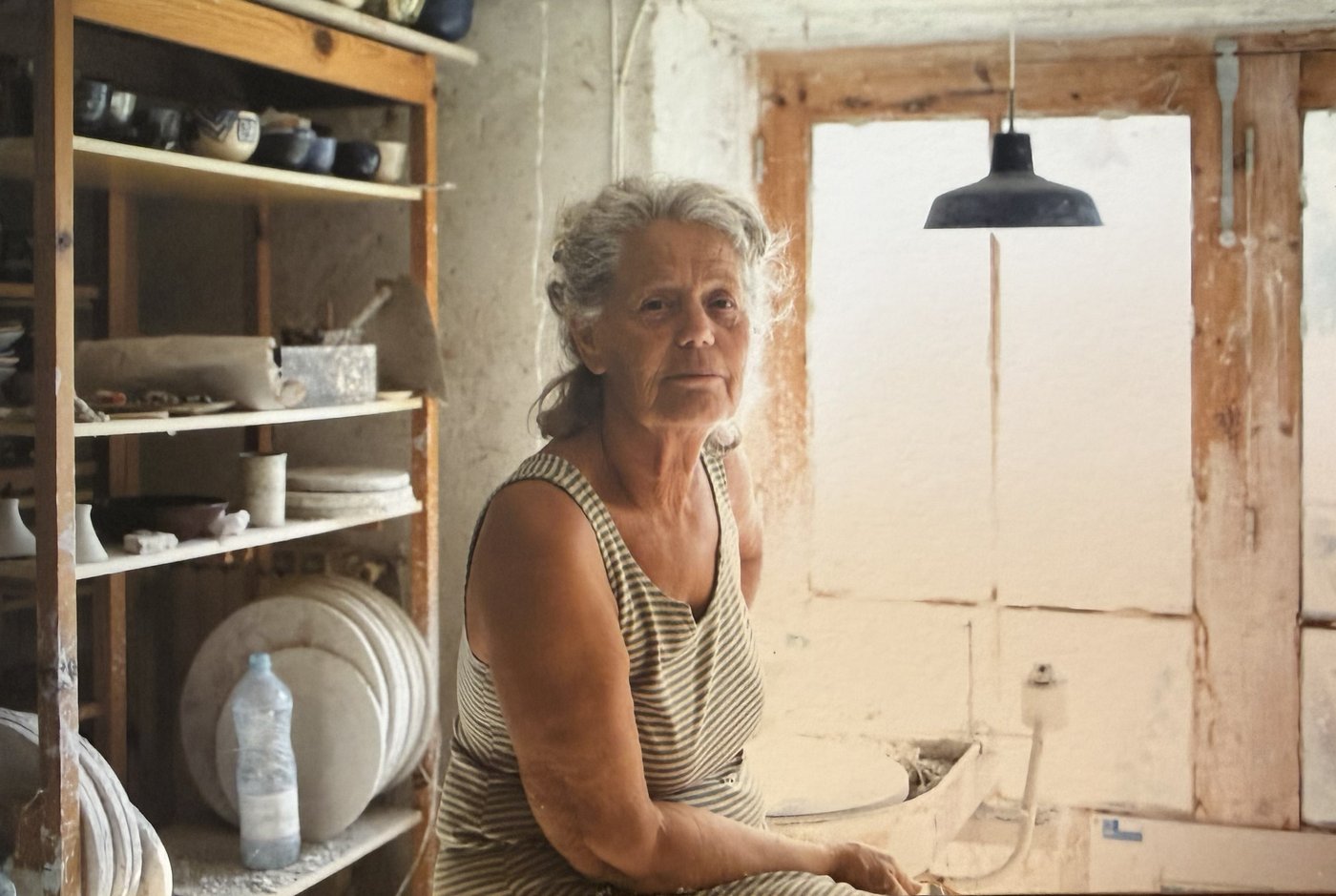
Nelly Bonnand in her studio, Les Trois Tilleuls. — Crédit photo : Emily Johnston
Born in Paris in 1943, Nelly Bonnand first trained at the École nationale d'art décoratif in Nice, which she attended from 1960 to 1964, alongside teachers who held the Prix de Rome — Jules Lengrand, Maurice Gambier, Pascal René and Claude Viallat. She continued her training from 1964 to 1968 at the École nationale supérieure des Beaux-Arts in Paris, in the painting studio of Raymond Legueult.
Between 1968 and 1971, the young artist lived in Bastia, Corsica, before settling in the southern Drôme, a region her work has remained closely tied to ever since. Two years later, she gradually set painting aside to devote herself entirely to ceramics, founding the Poterie des Trois Tilleuls in 1974, in Bénivay‑Ollon, in the Baronnies provençales.
Born in Paris, in 1943
Training Nice (1960–64), Beaux-Arts Paris (1964–68)
Studio Les Trois Tilleuls, since 1974
Location Bénivay‑Ollon, Drôme (26170), France
This shift from canvas to clay is not a break, but the continuation of the same visual research, now applied to the object: colour, composition and the relationship between surface and volume remain at the heart of her practice, from the bowl to the teapot.
The studio's techniques rely on Salernes clay, used as a slip, coloured with in-house oxides — cobalt, copper and iron — then reworked with sgraffito written freehand with a point, without a comb, under a clear glaze that reveals the depth of the colours and highlights the variations in the material. The stoneware is single-fired at 1260°C. Firing was done with gas for many decades, until 2018, before switching to electric firing.
The motifs, sometimes geometric, sometimes more spontaneous, do not seek to conceal the material: instead, they follow its irregularities and assert the singular character of each piece.
This approach can be compared, in principle, to that of Enzo Mari: for both of them, the utilitarian object — bowl, teapot, plate — is never reduced to decorative production, but becomes a field of research in its own right, held to a demand for coherence between form, function and material.
Every piece leaving the studio bears, underneath, a brush-painted calligraphic signature depicting the three linden trees standing on the Bénivay‑Ollon property — a name given to the studio by her teacher, upon seeing these three trees, at its founding in 1974 — both a mark of origin and a signature.
Two registers, one gesture
Two pictorial languages run through the body of work — often on the same piece, never without intention.
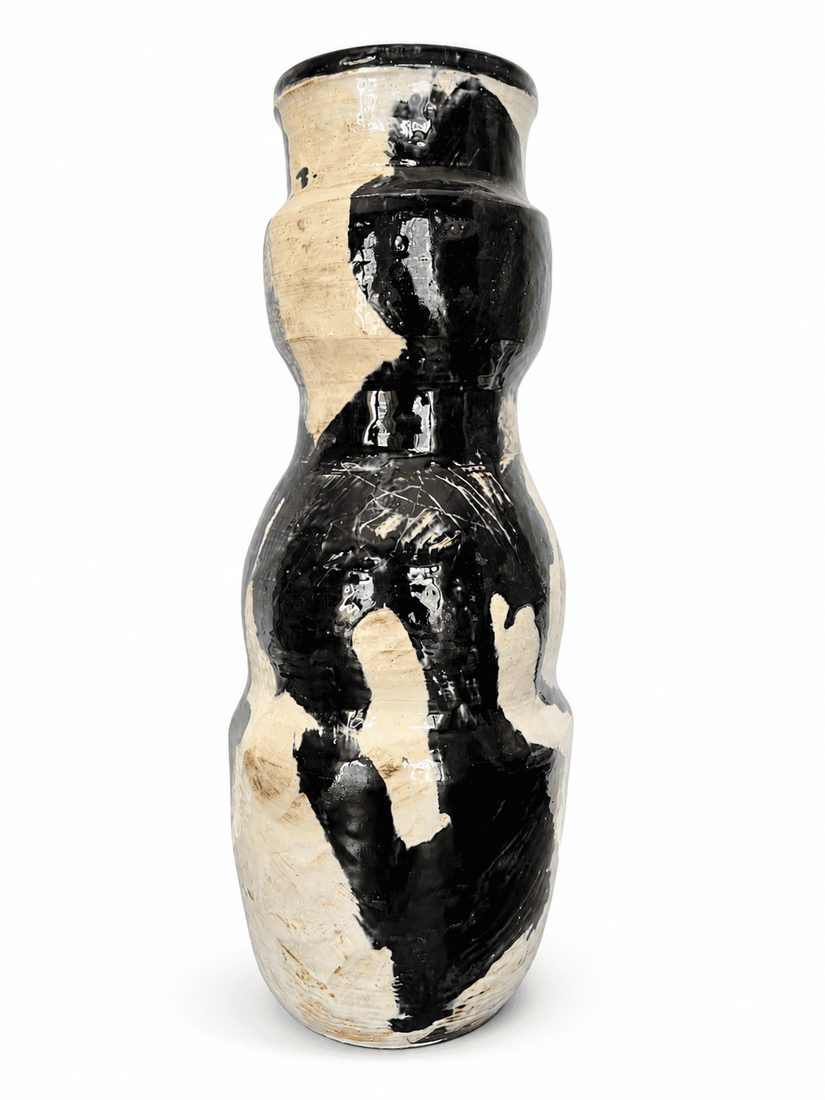
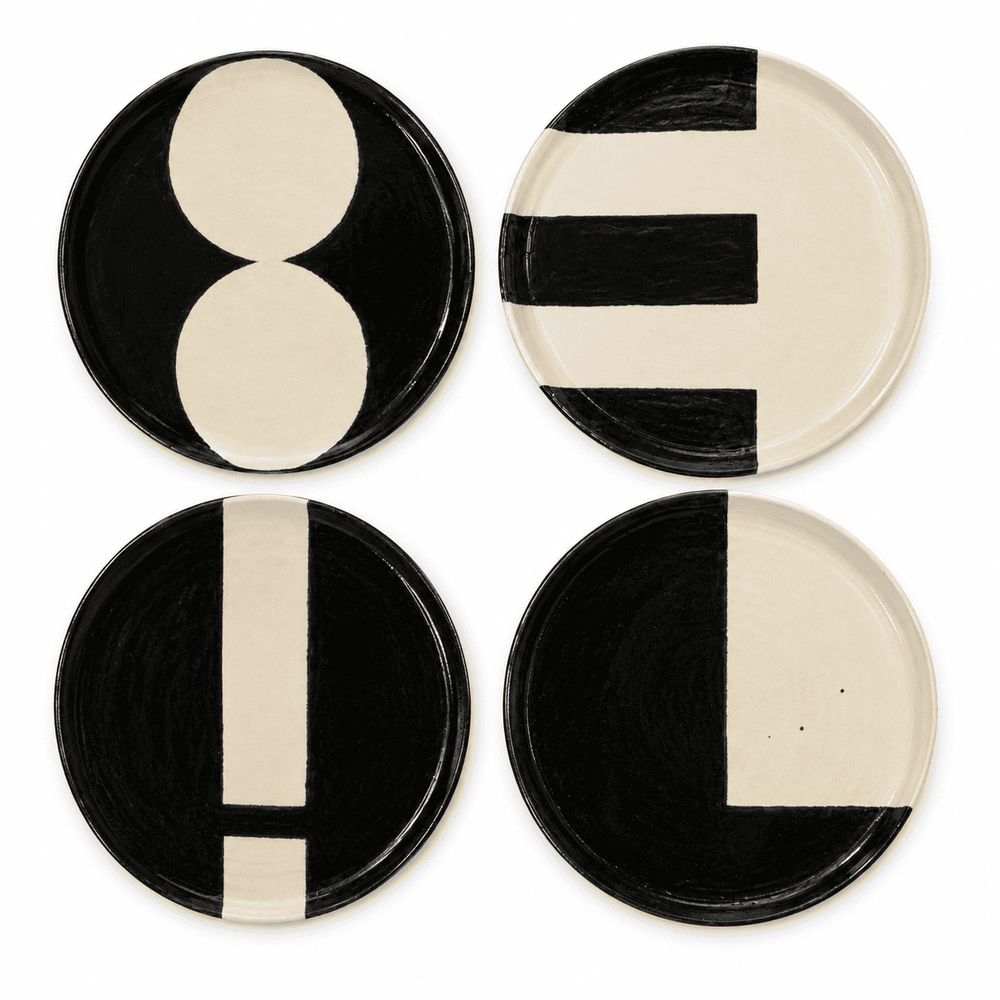
Registre 01
Black & cream, clear glaze
A black or deep blue ground, clear glaze, cream reserves painted with a broad gesture — a play of graphic, almost calligraphic negative space, evoking the abstraction of American painting, in the manner of Robert Motherwell, the American painter. It appears on the sculptural pinched vases, certain plates, and the large tiled table.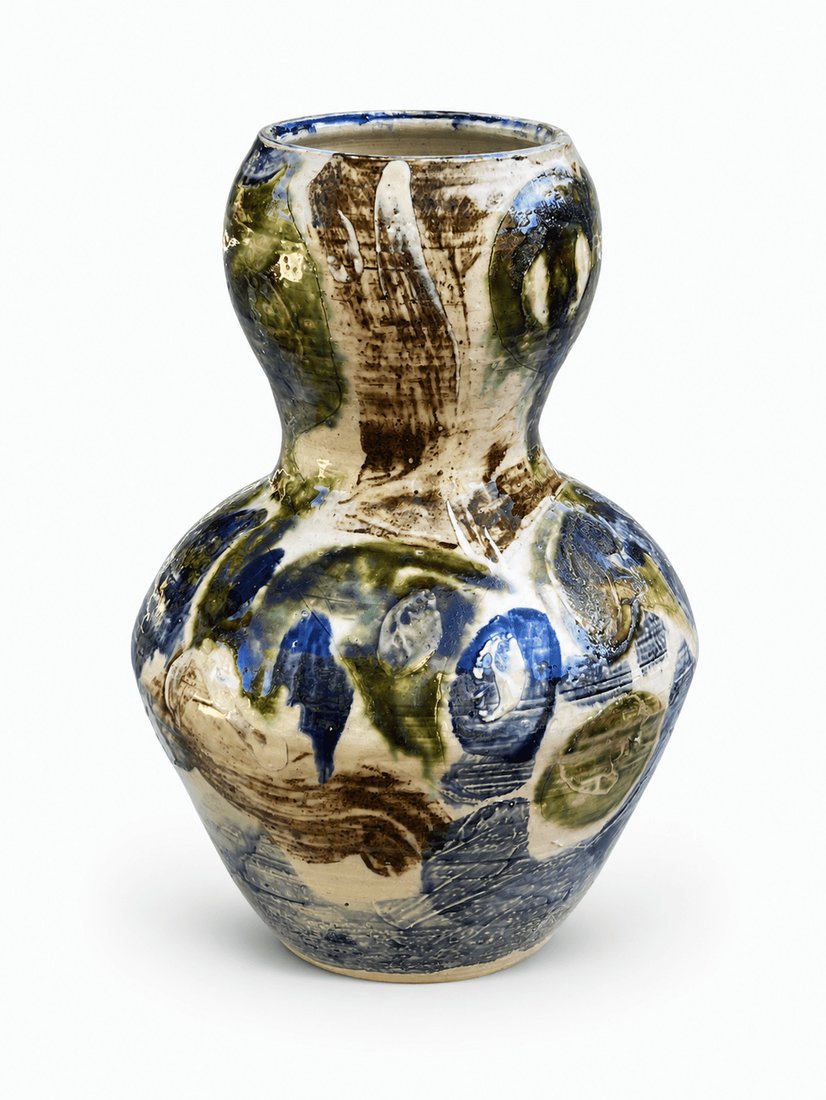
Registre 02
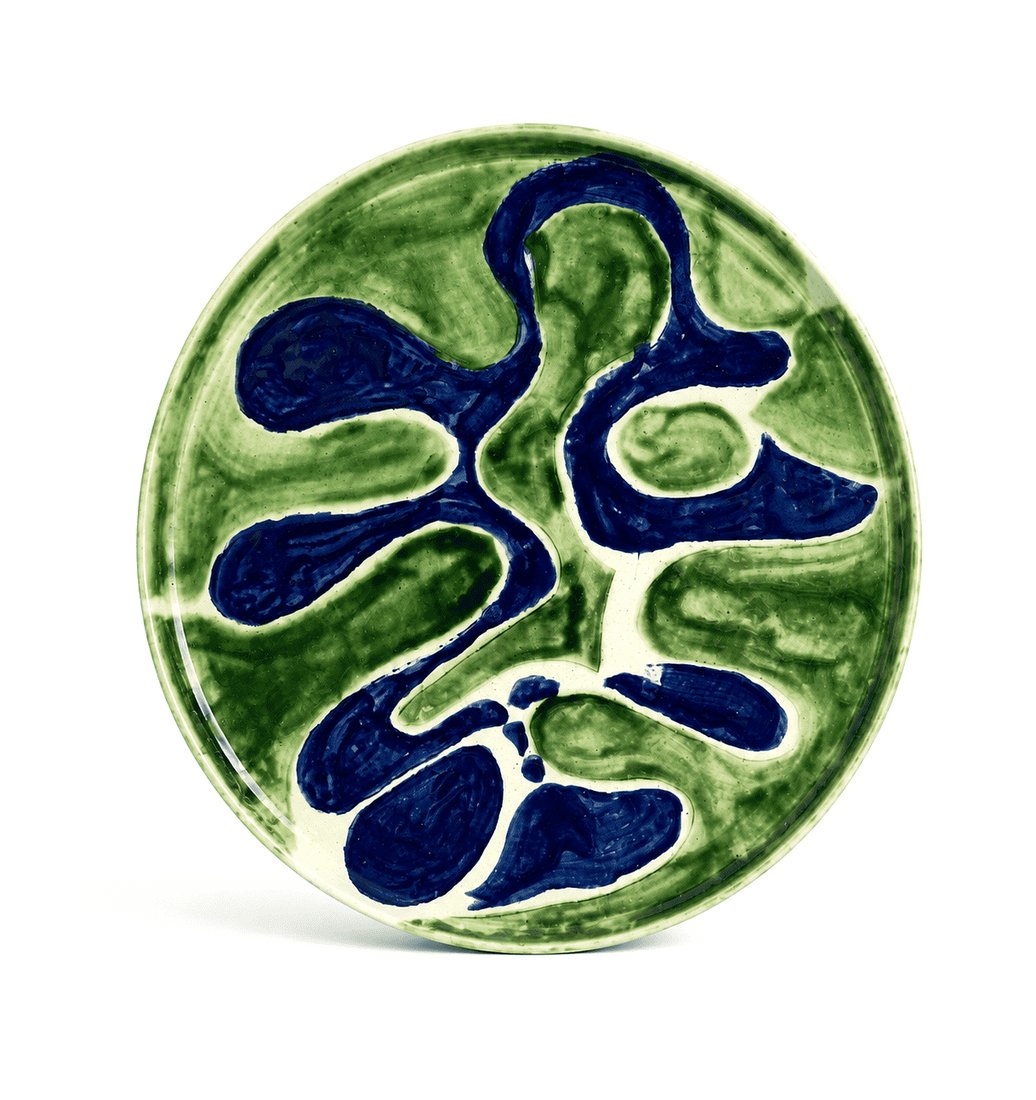
Cobalt & olive on cream
A cream ground, looser painting in cobalt blue, olive green and ochre-brown, sometimes enhanced with a combed sgraffito that adds texture within the colour. Seen on the plates, teapots and the large flared-neck vases.Registre 03
Raw stoneware, mineral matter
Covered boxes and handled pieces, in raw or lightly glazed stoneware, with heavily textured surfaces — bark, coral — with no painted decoration. The throwing remains visible and unapologetic, striations and slight asymmetries included: a living, non-industrial material.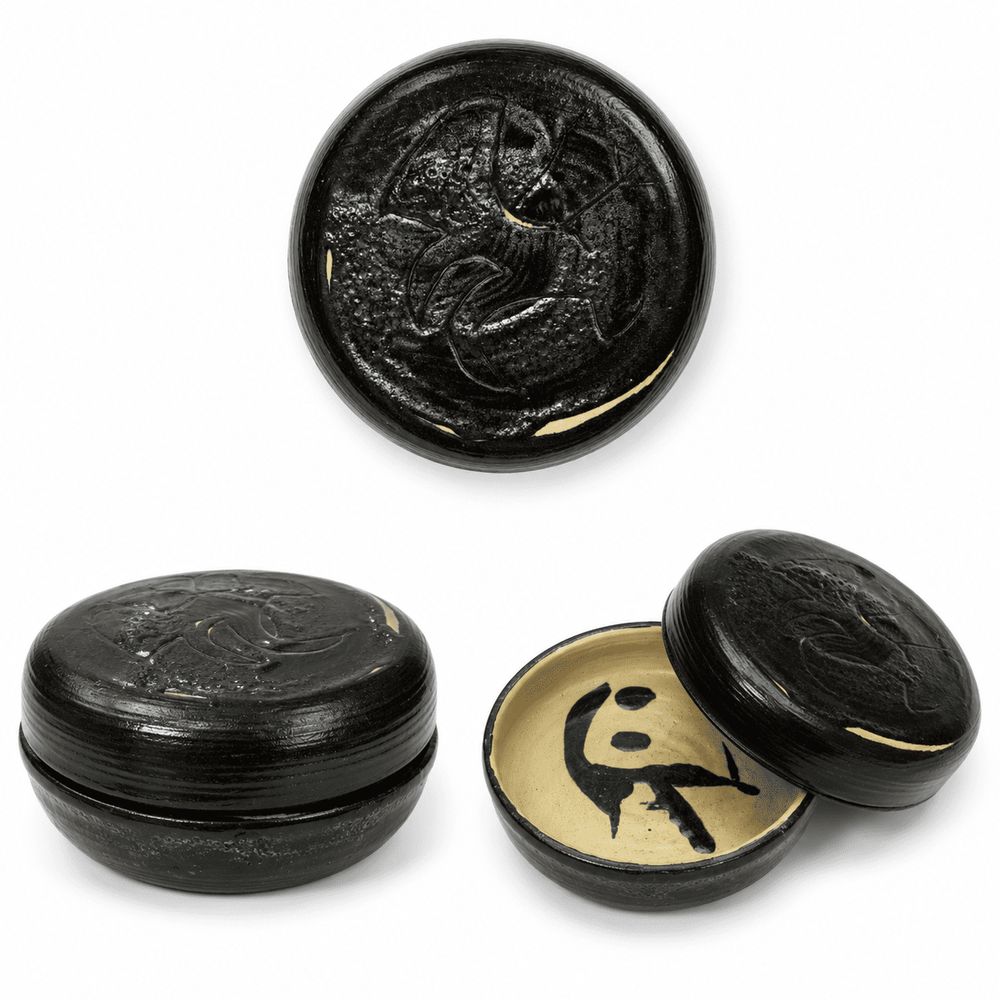
02
Gallery
Pièces uniques, tournées et peintes à l'atelier Les Trois Tilleuls.
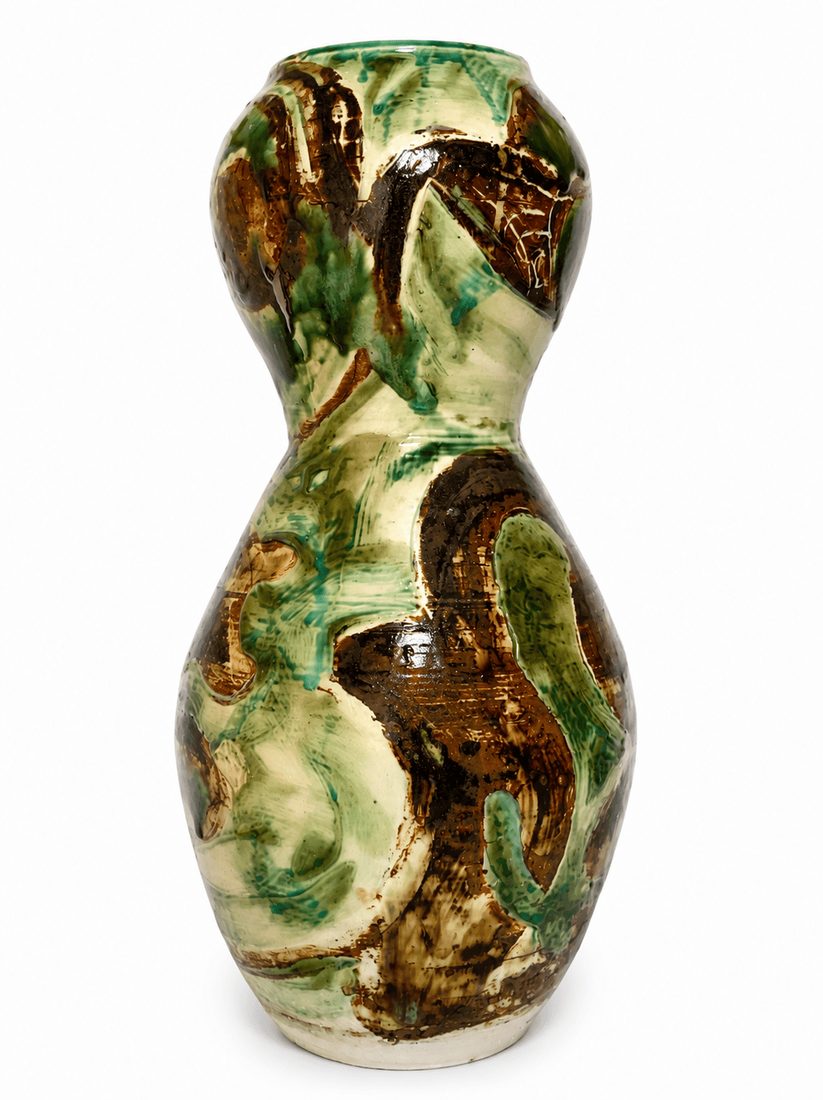
Vase Serpent46 × 22 × ⌀ 11 cm
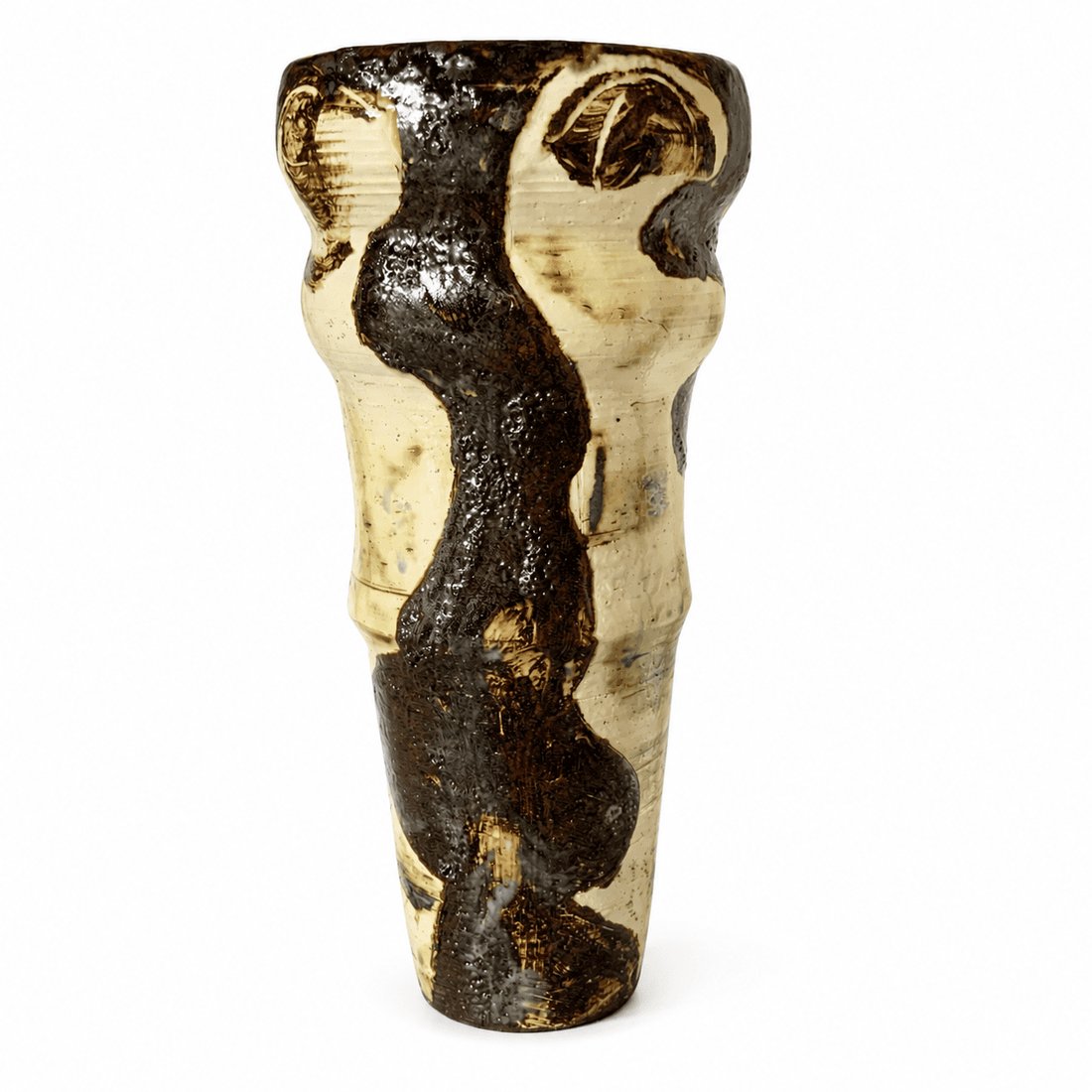
Vase Brown Eye2025 — H 40 × L 17 × ⌀ 17 cm
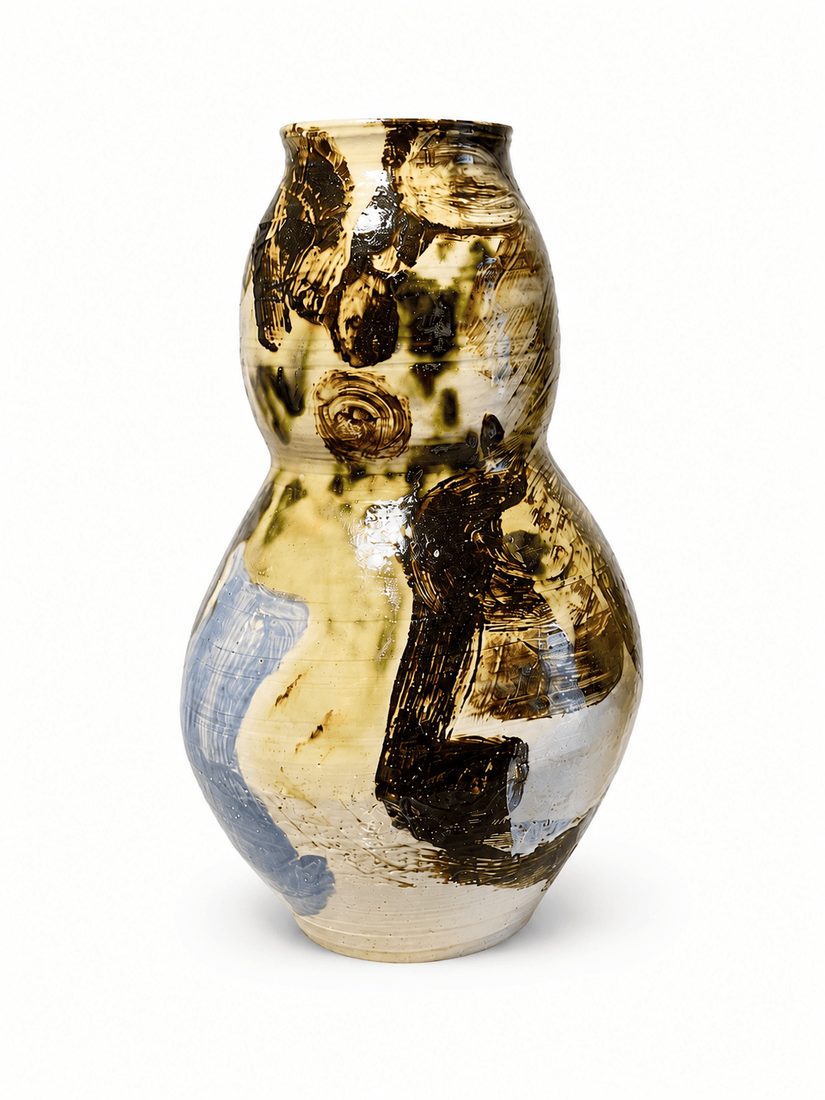
VaseBrown & pale blue
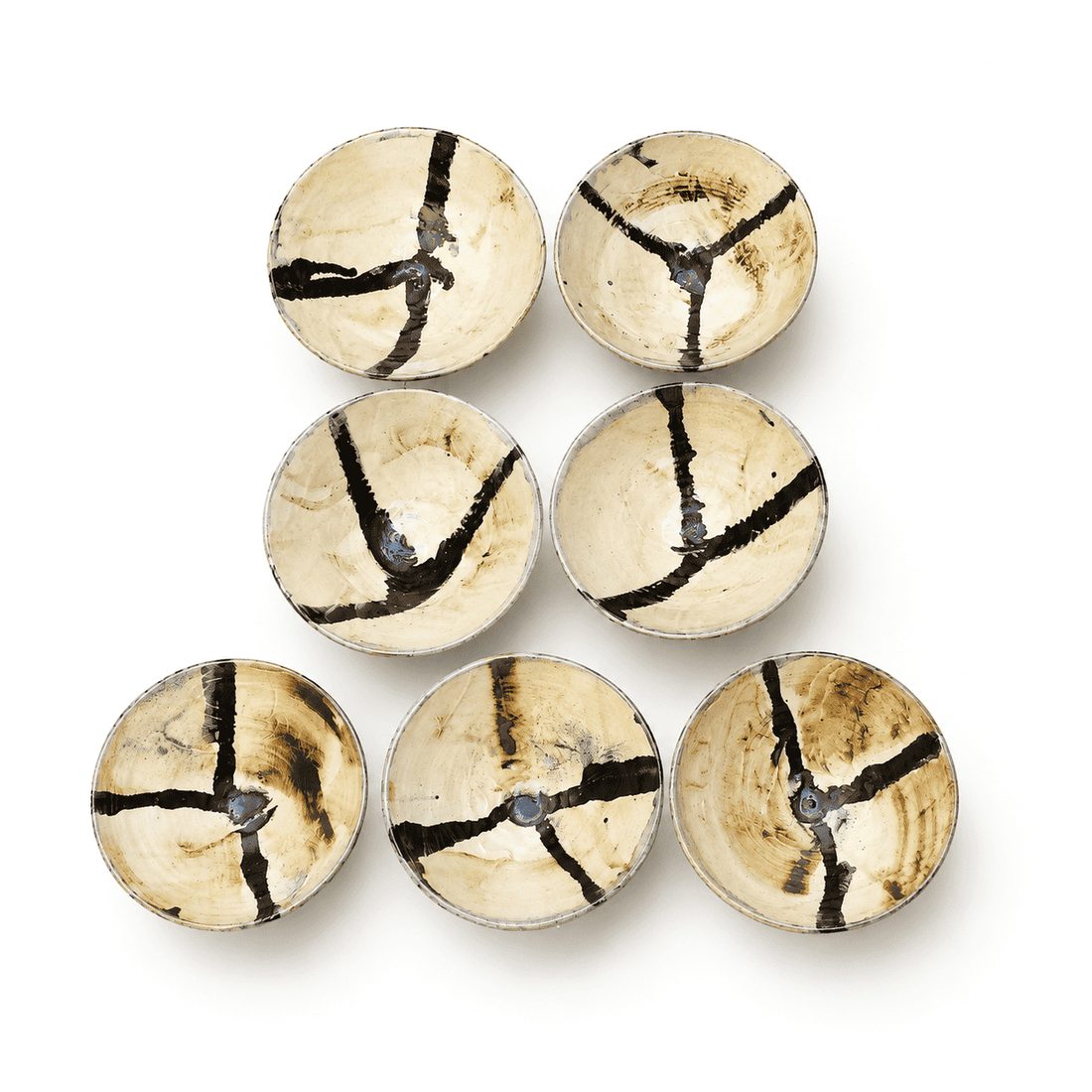
Bowls, set of sevenBrown & black
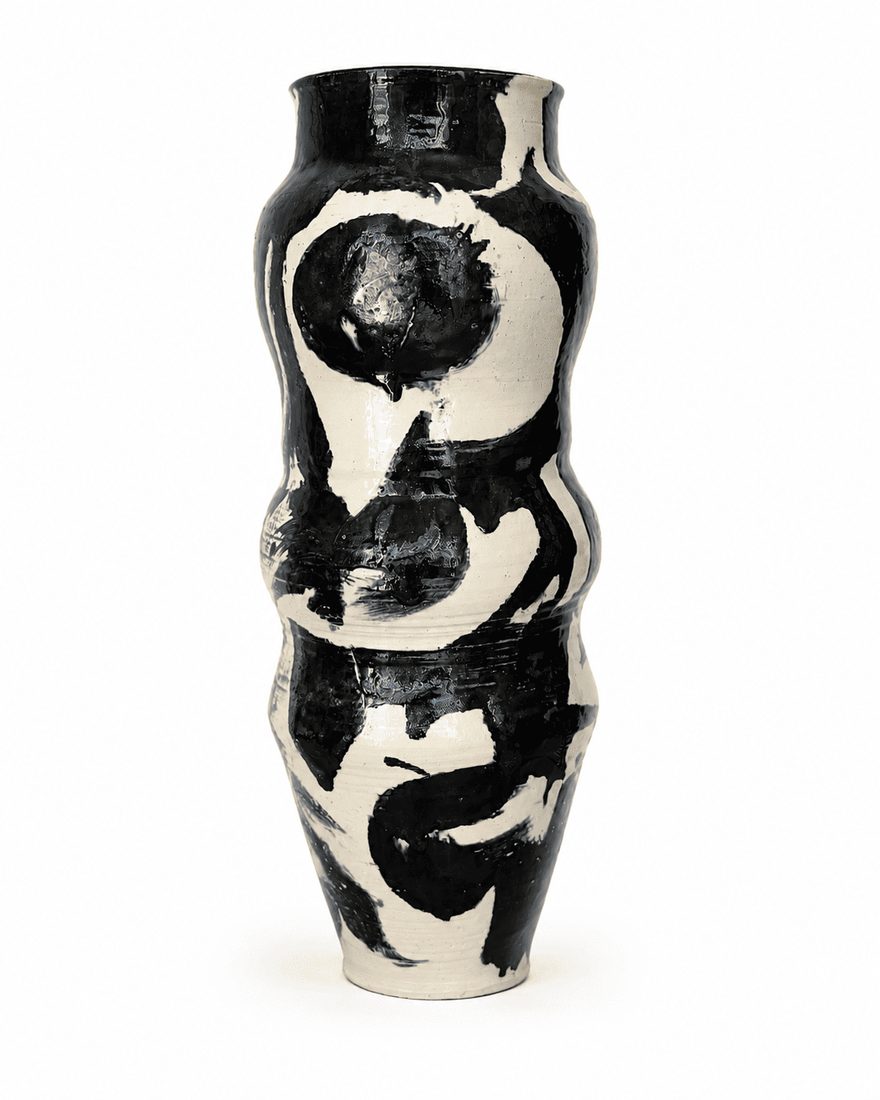
Vase FeatherH 45 × L 17 × ⌀ 11 cm
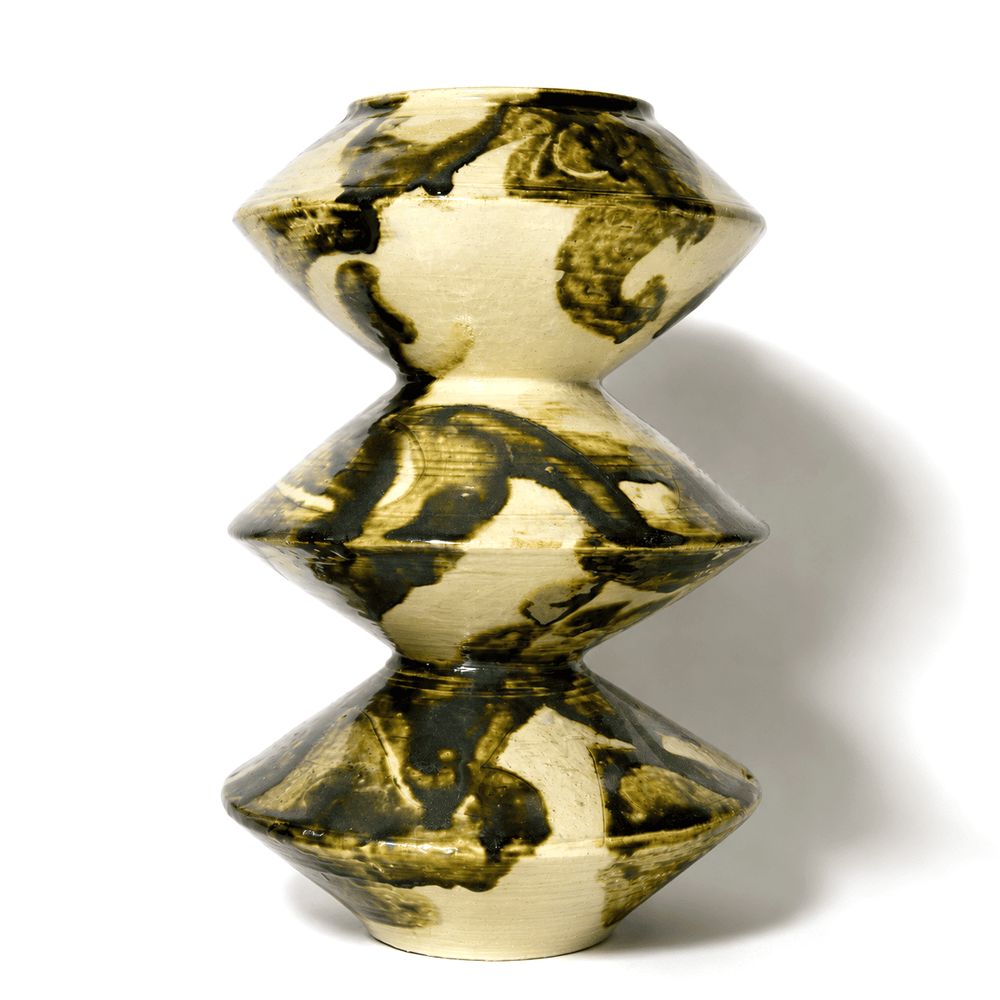
Vase Pagoda, seaweed greenH 37 × ⌀ 26 cm
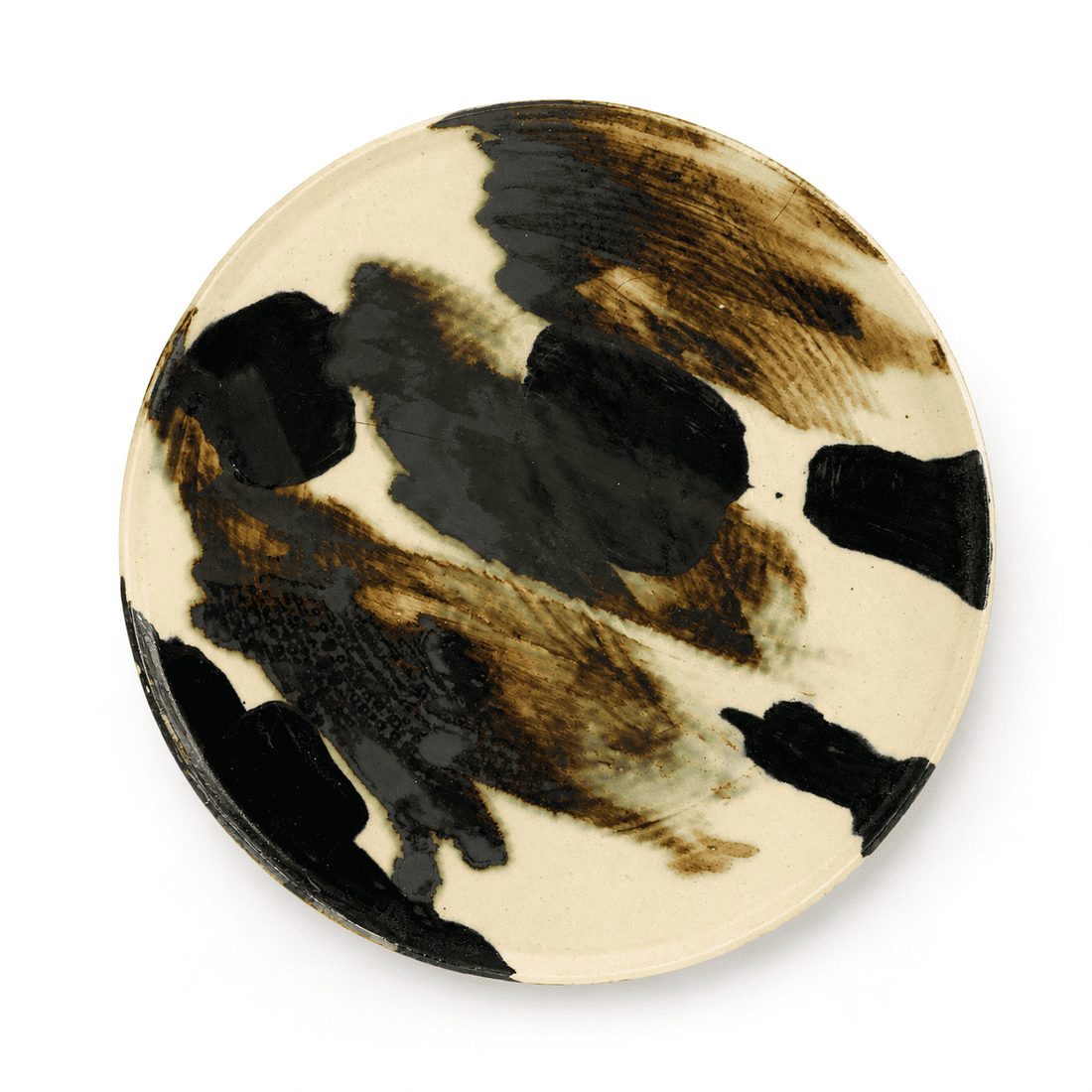
PlateBlack & brown
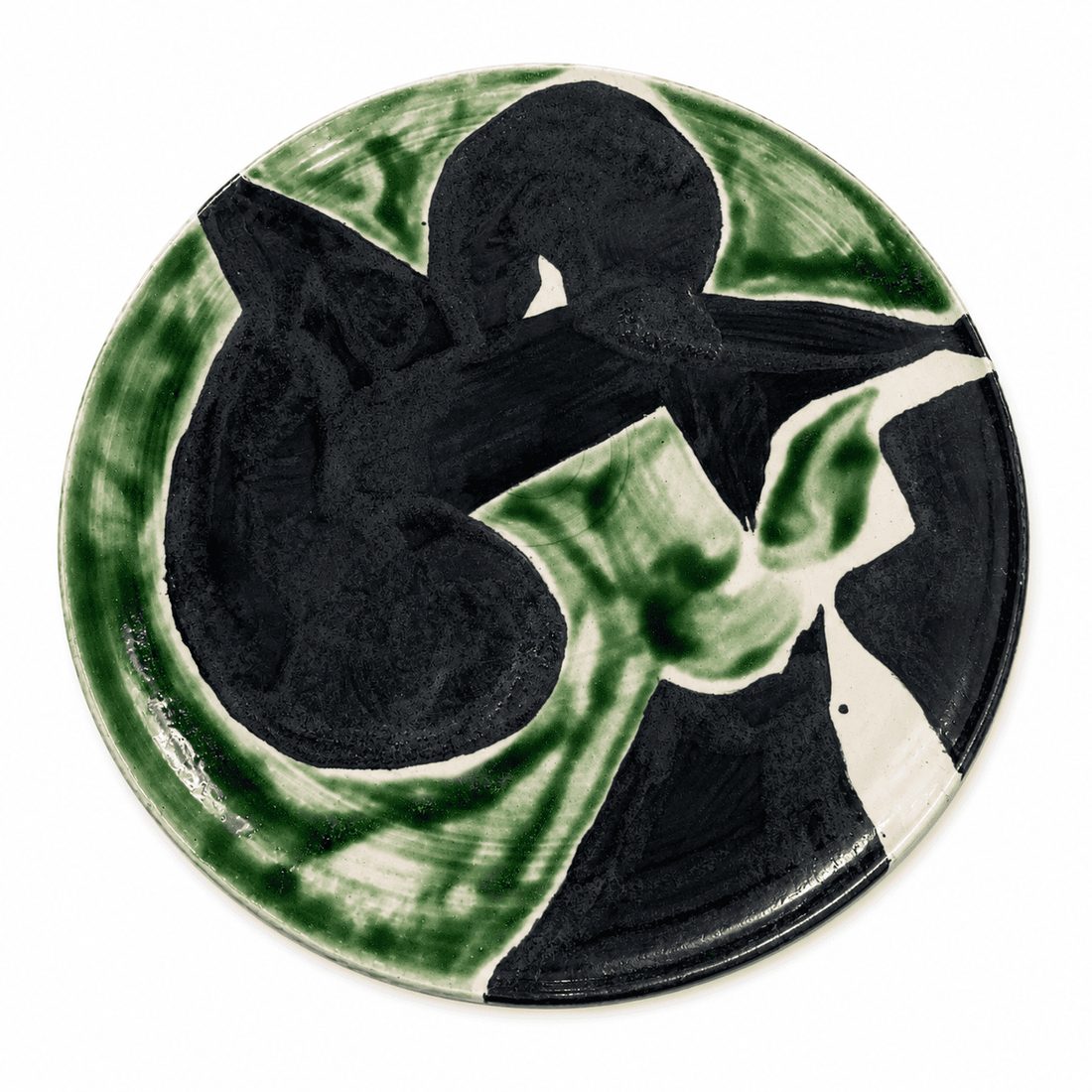
PlateBlack & green
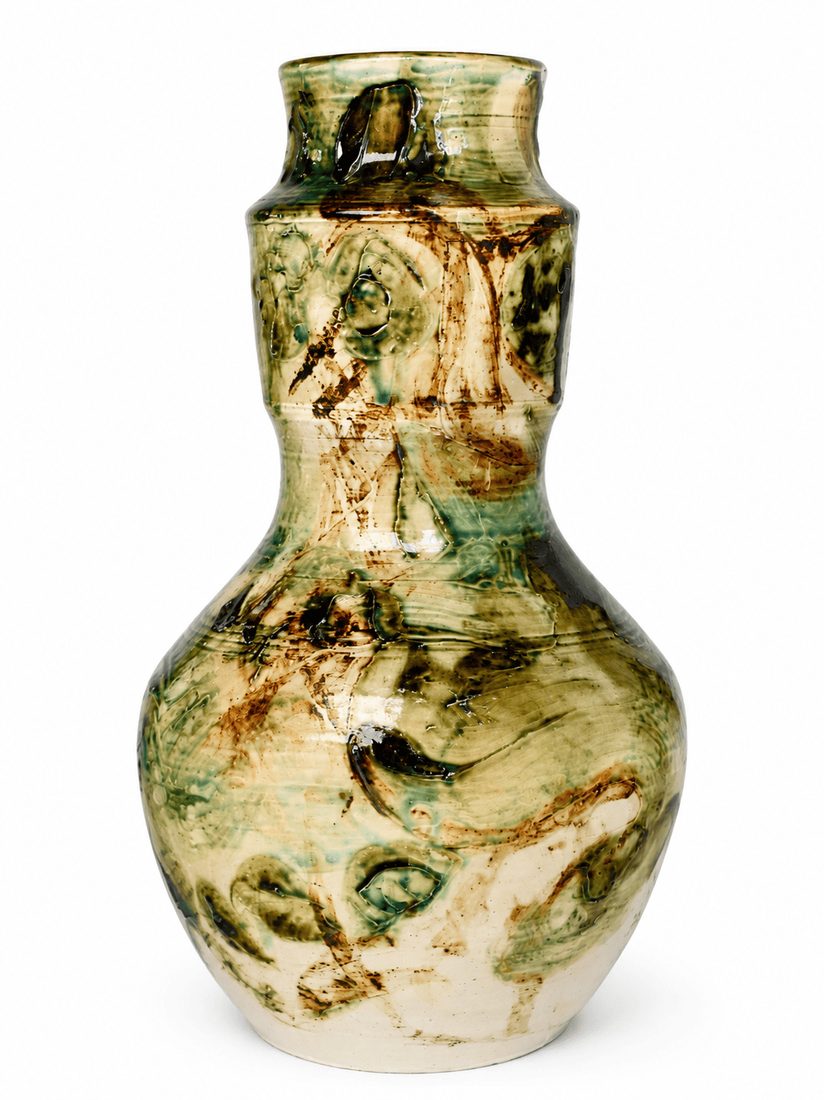
Vase Copper Eye45 × 24 × ⌀ 9 cm
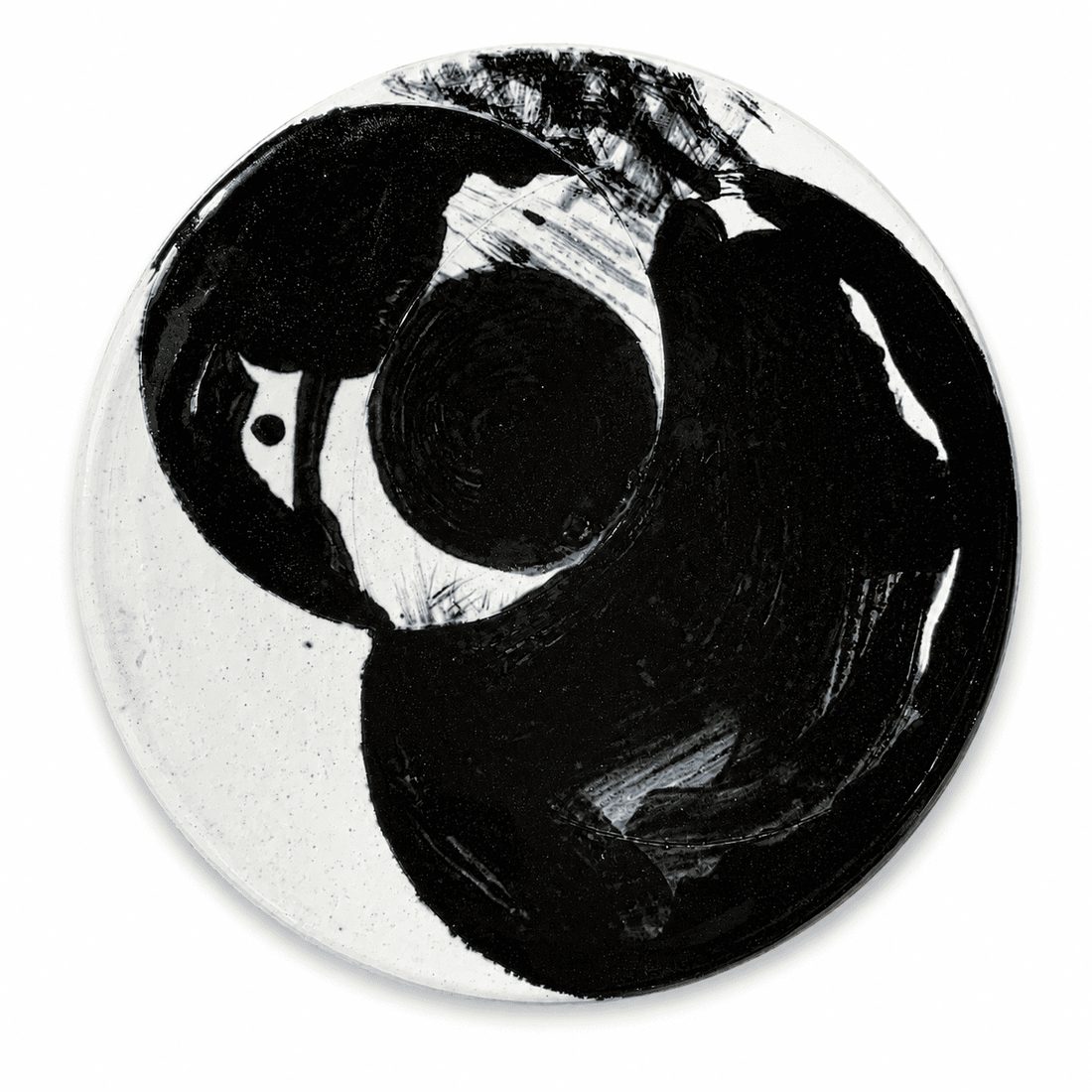
PlateBlack & white
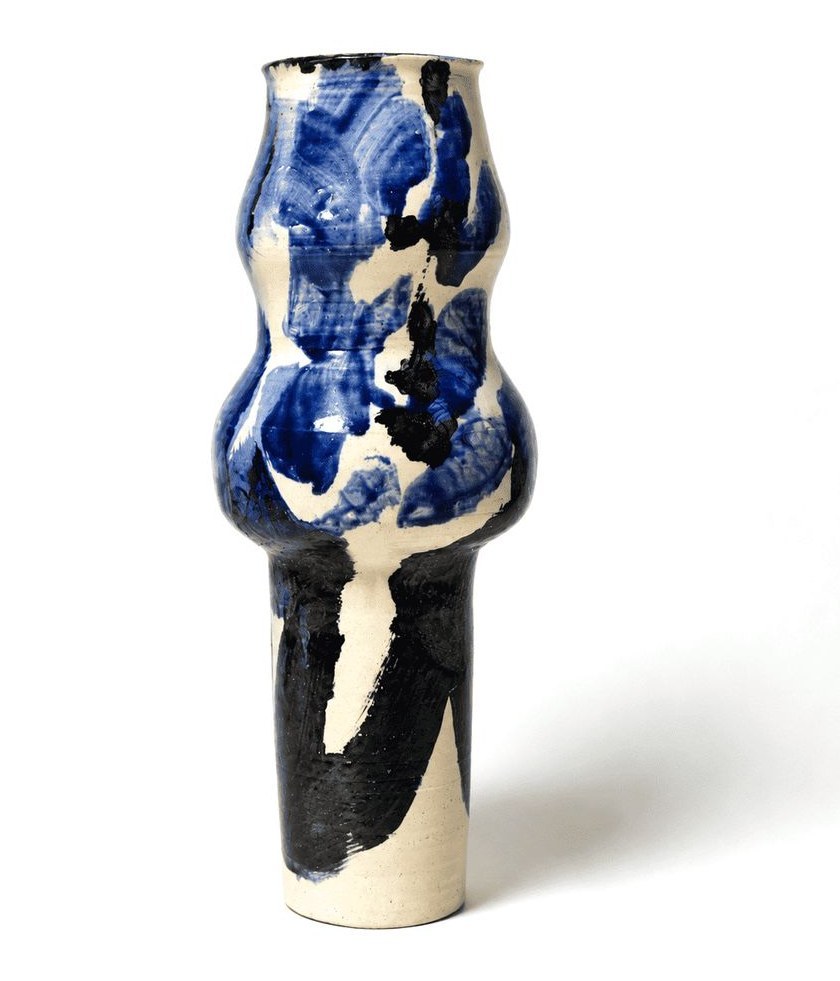
Sculptural VaseBlue, black & cream
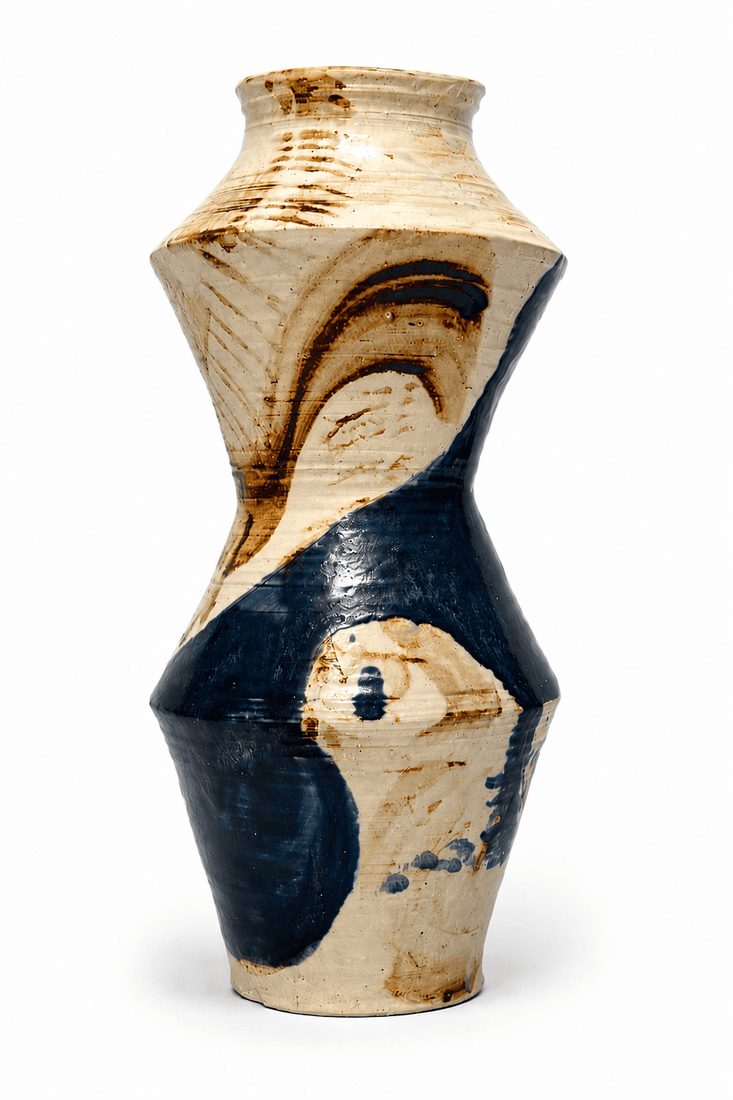
Vase PagodaNavy blue & cream
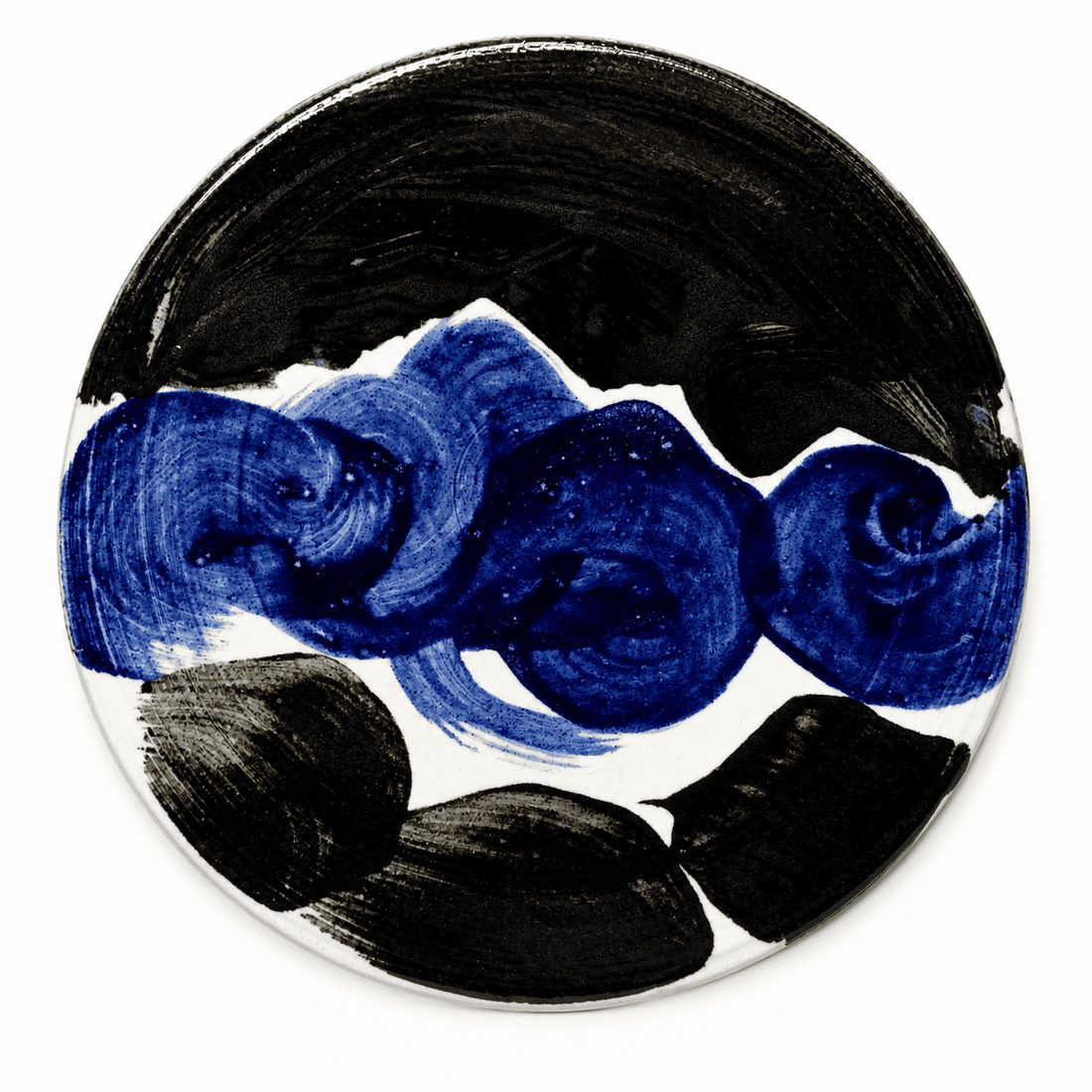
PlateNavy blue & black
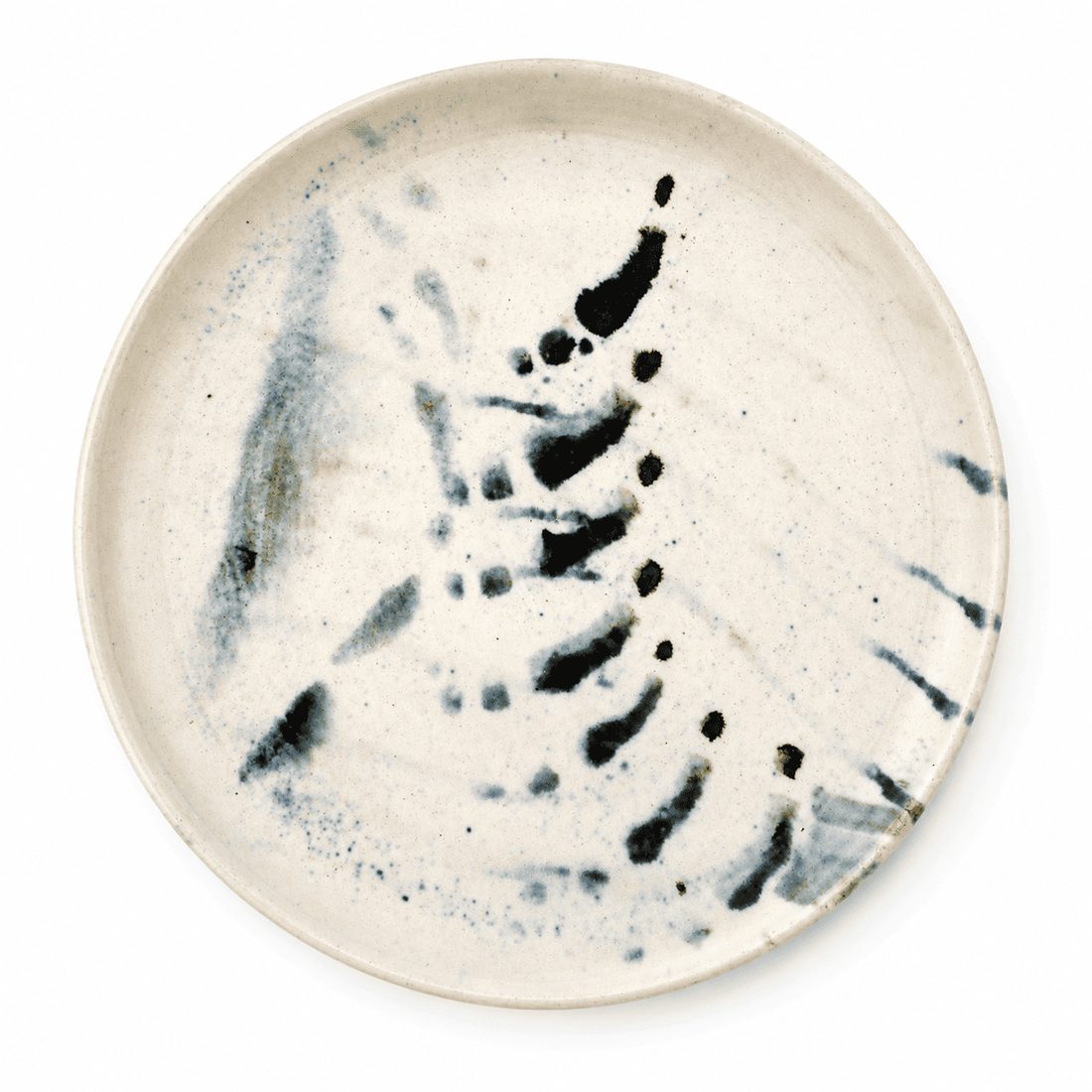
PlateBlue-grey & cream
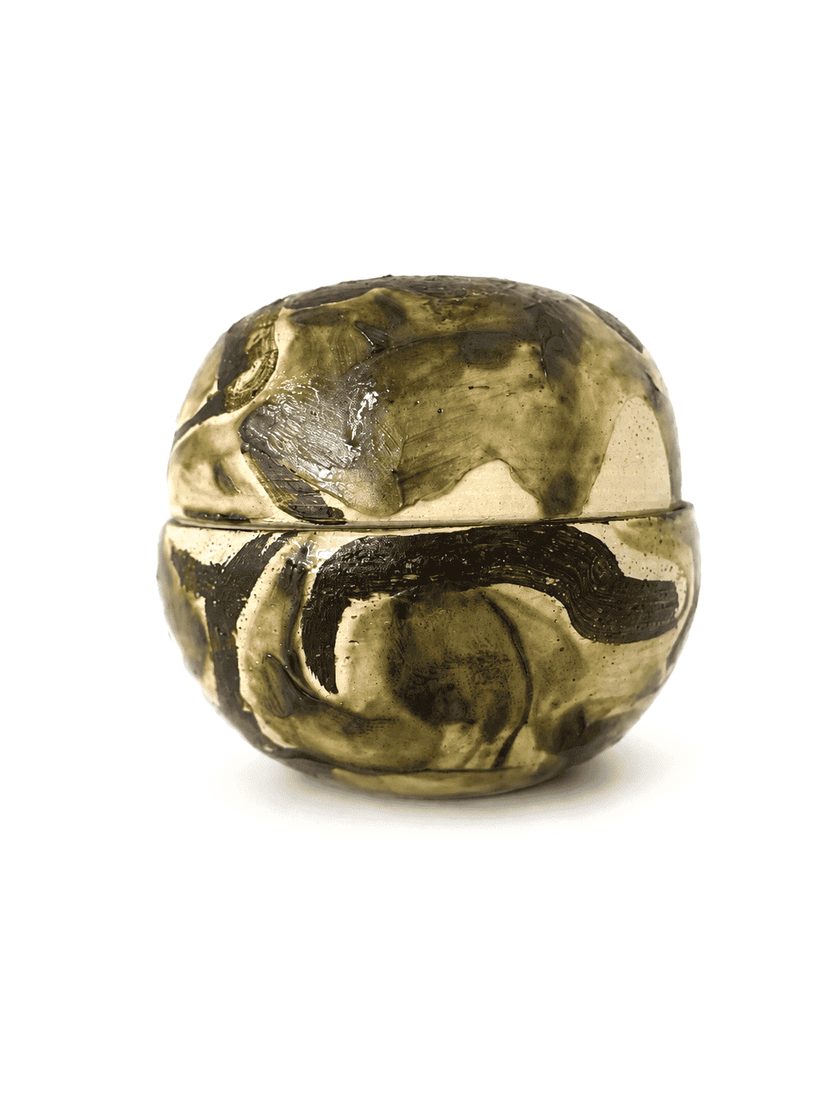
Sphere BoxWith lid, olive & brown
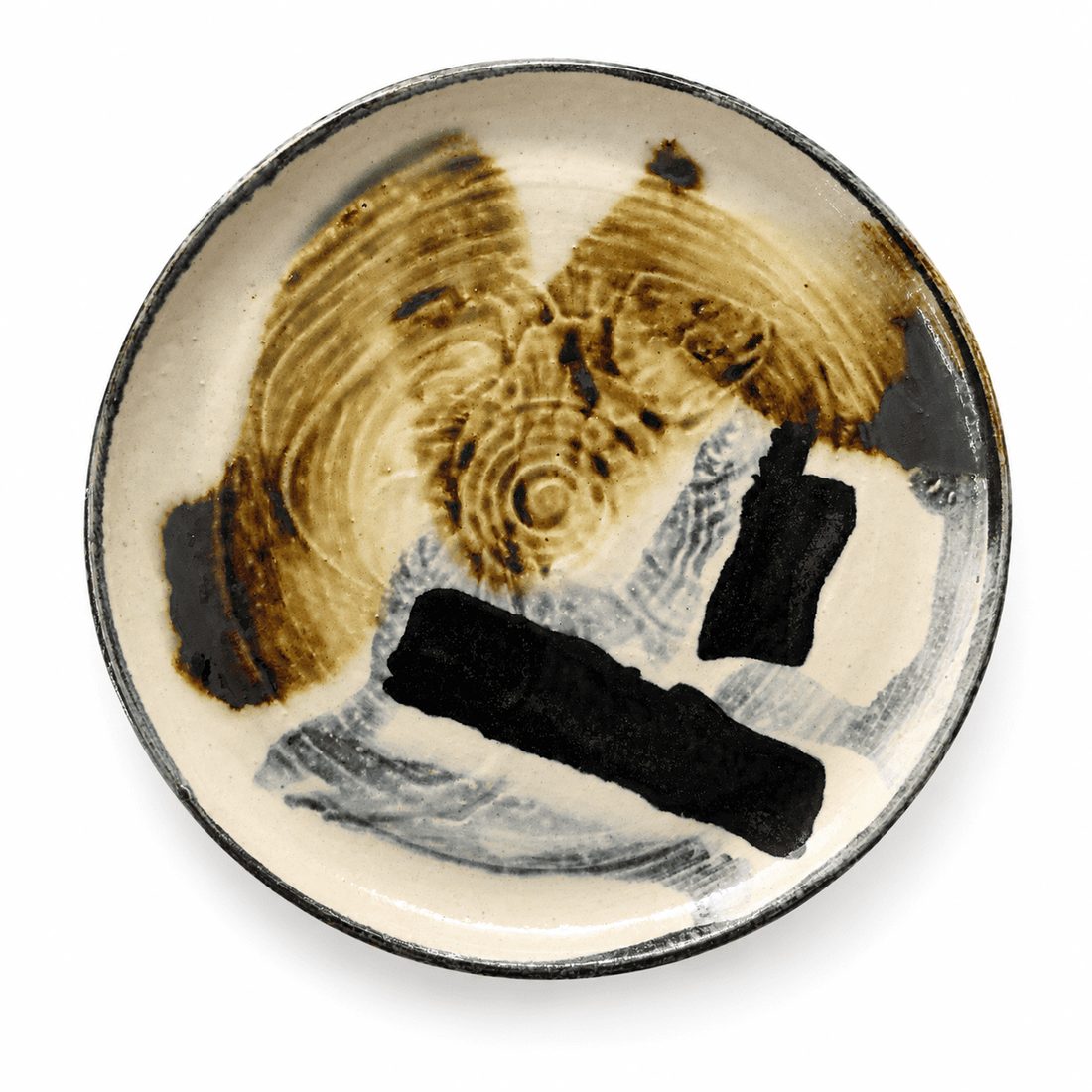
PlateOchre & black
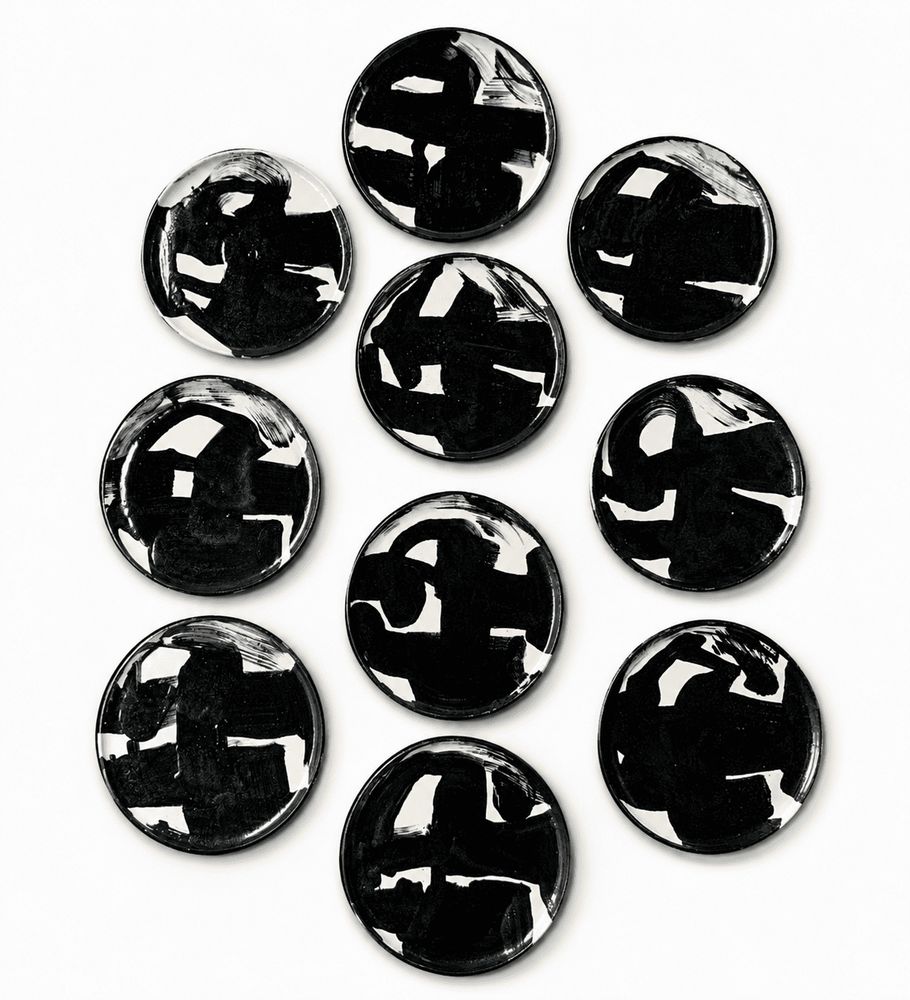
Chillida Plates⌀ 26/27 cm
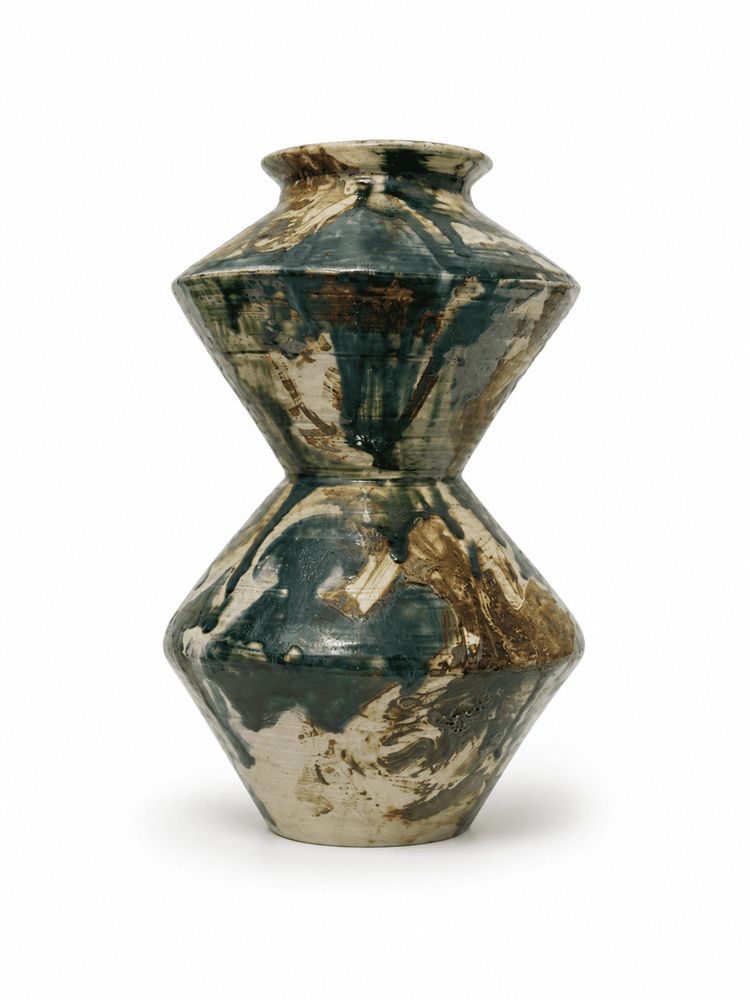
Vase PagodaBrown & olive
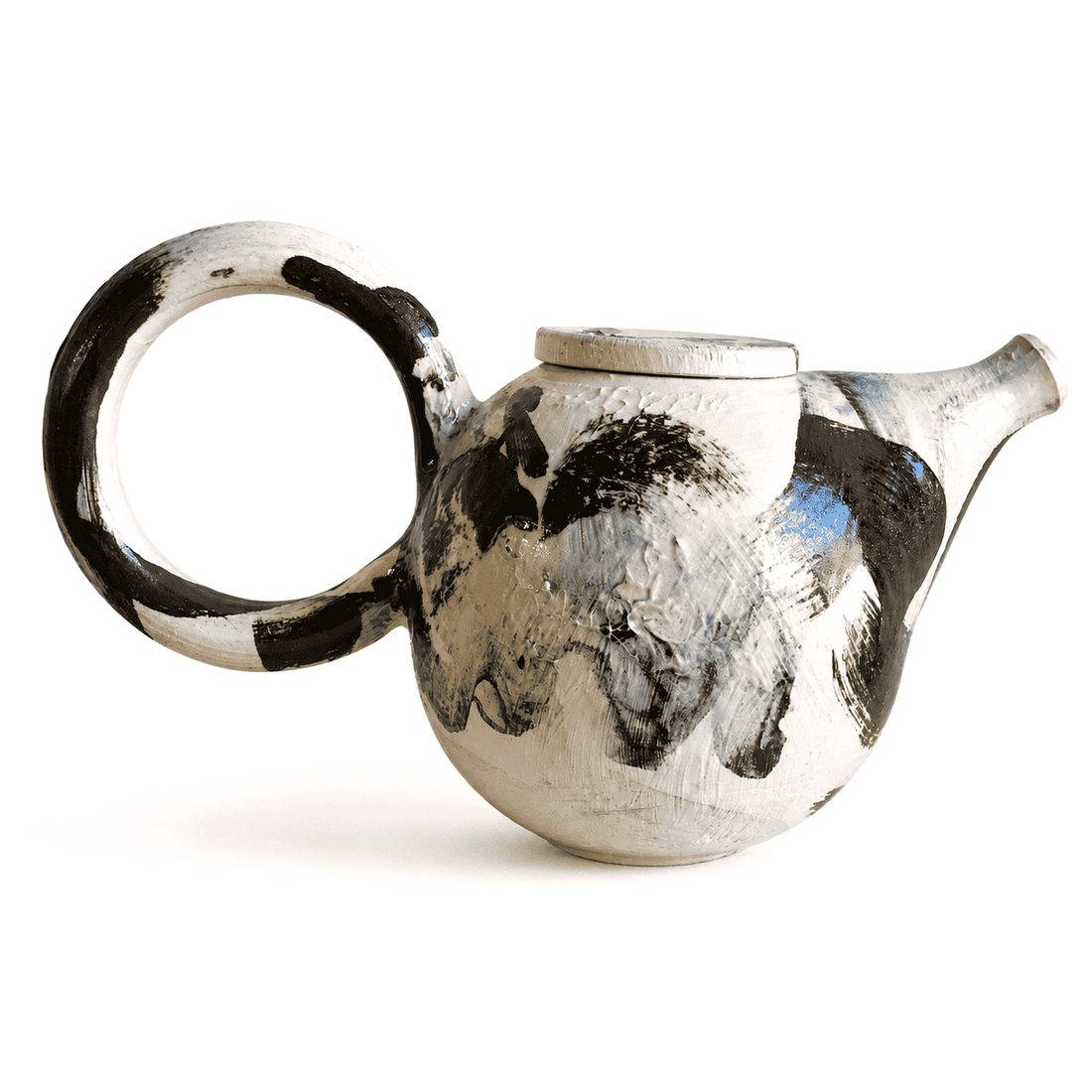
TeapotCircular handle, black & cream
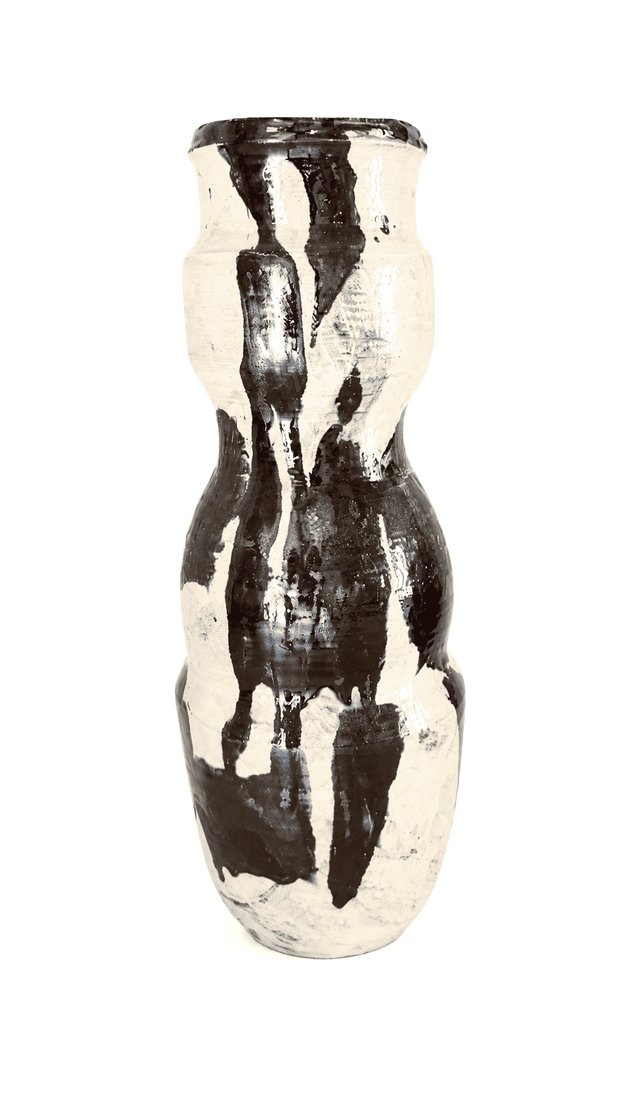
Vase MotherwellBlack & cream
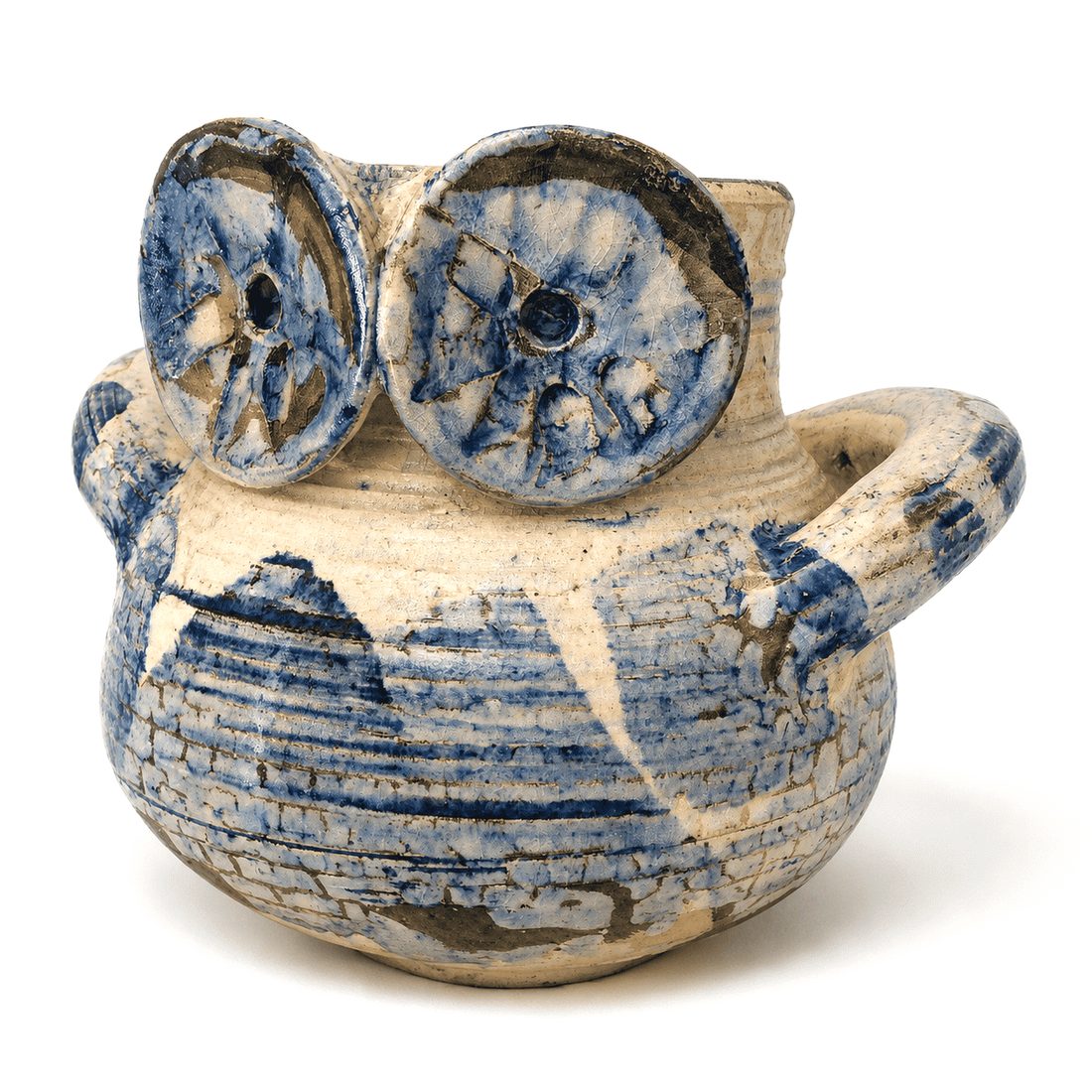
Vase OwlBlue & cream
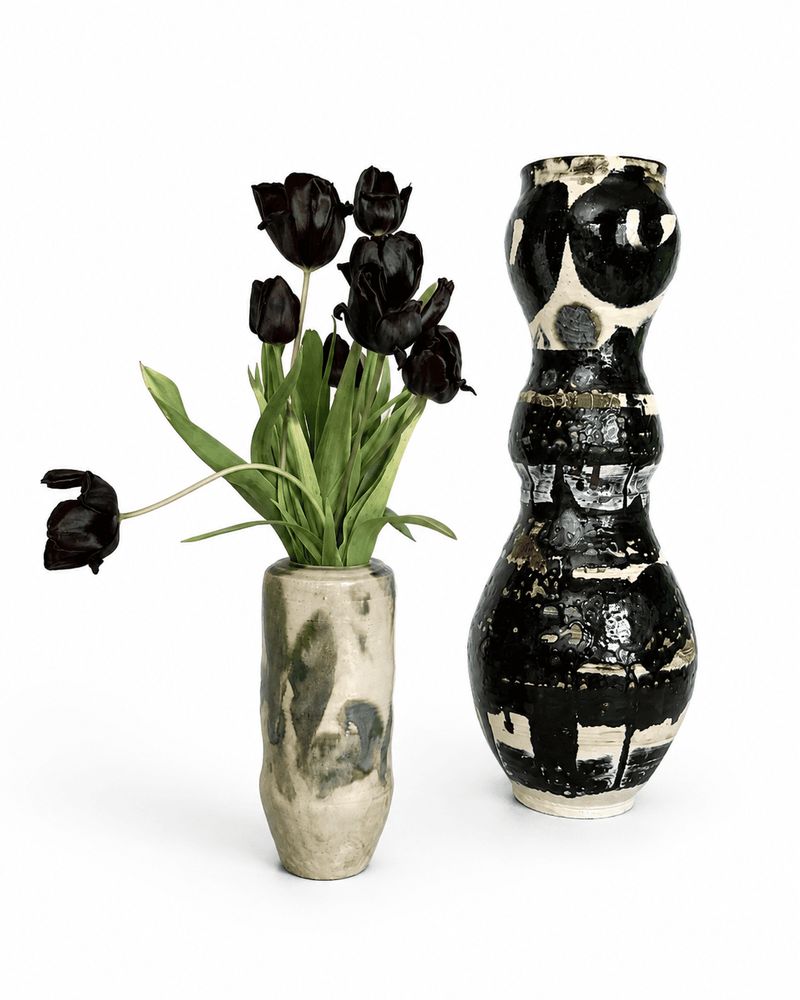
Vase and PinBlack
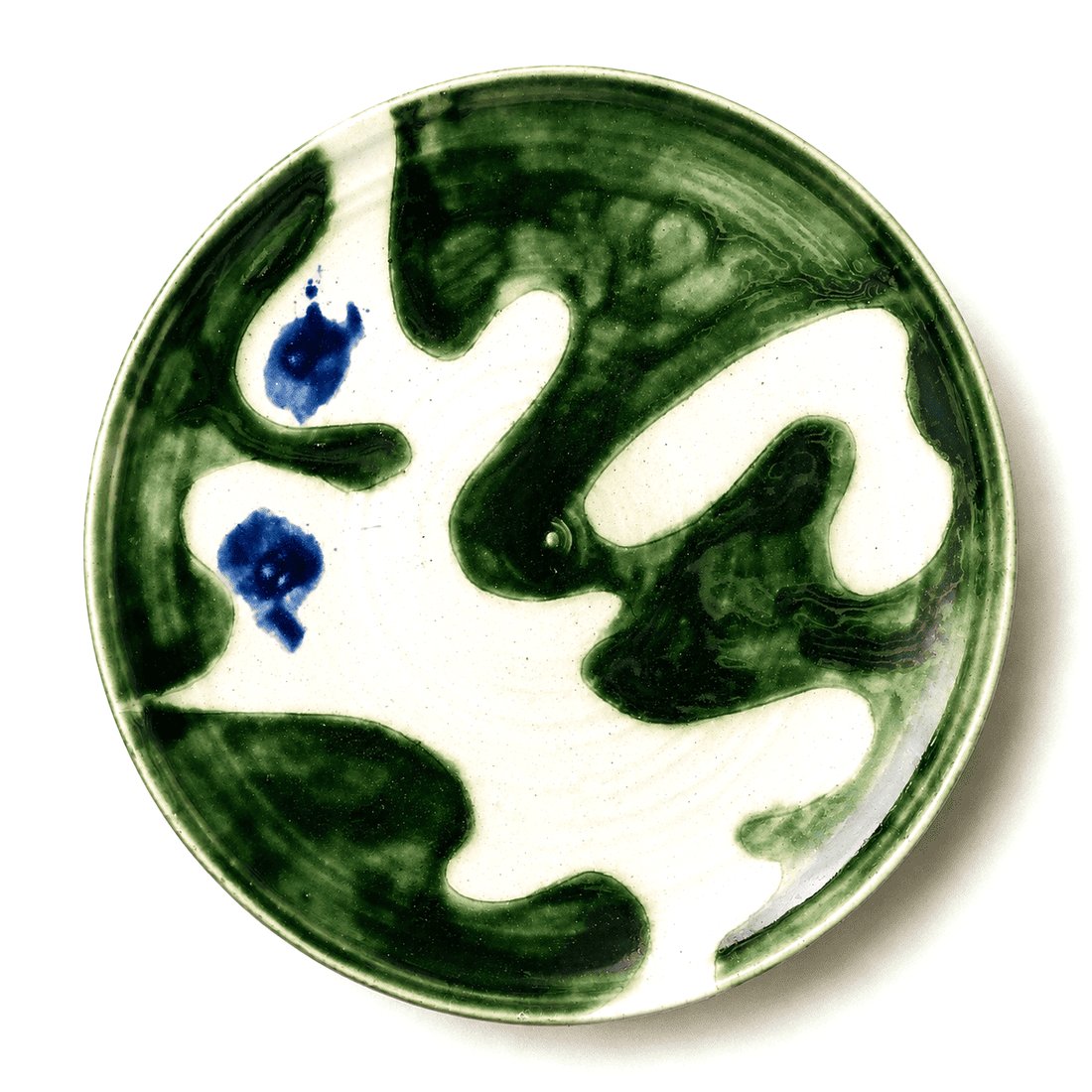
PlateDeep green, touches of blue
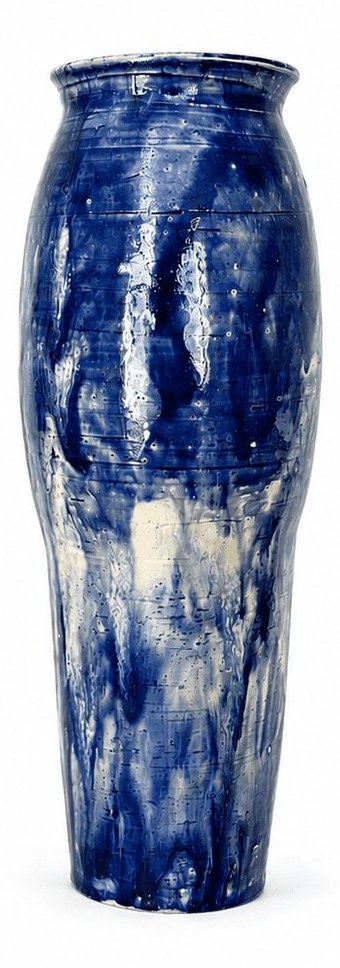
Celadon Blue VaseH 36 × L 13 × ⌀ 8 cm
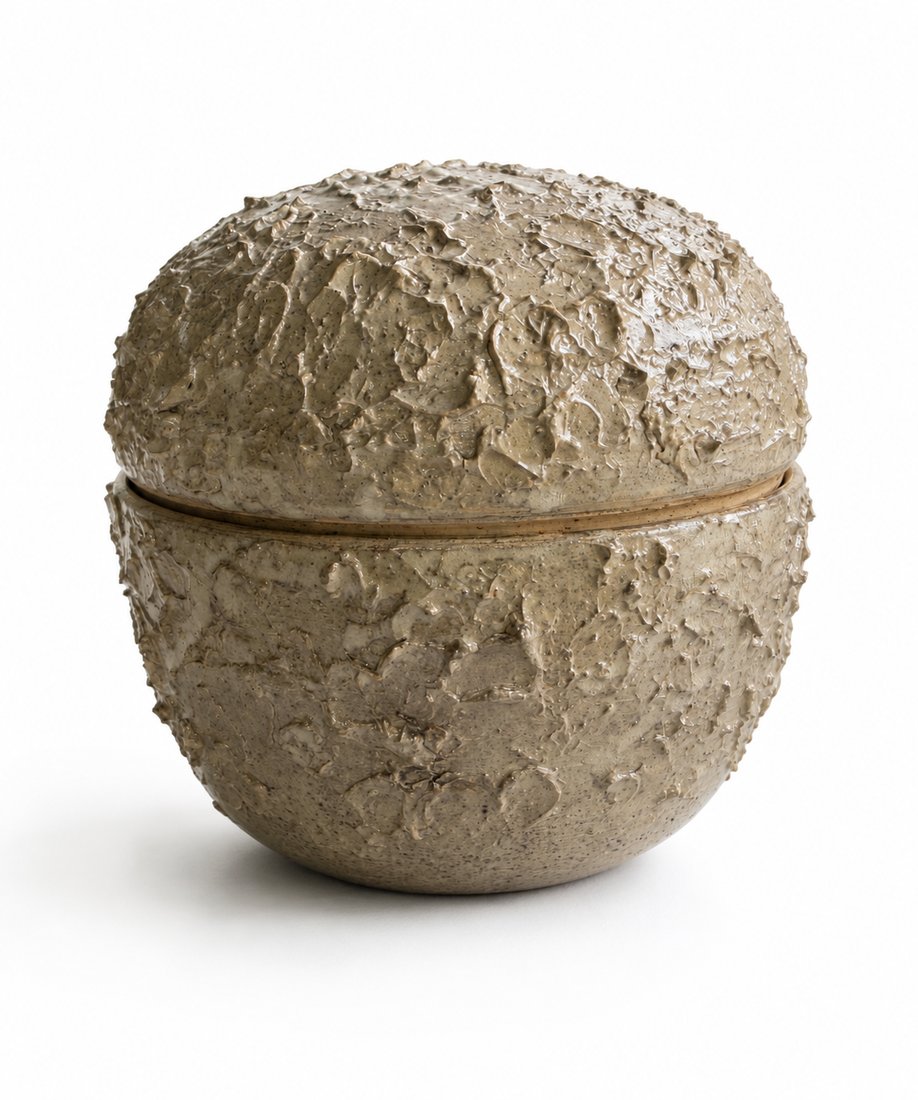
Covered BoxRaw stoneware, volcanic lava effect
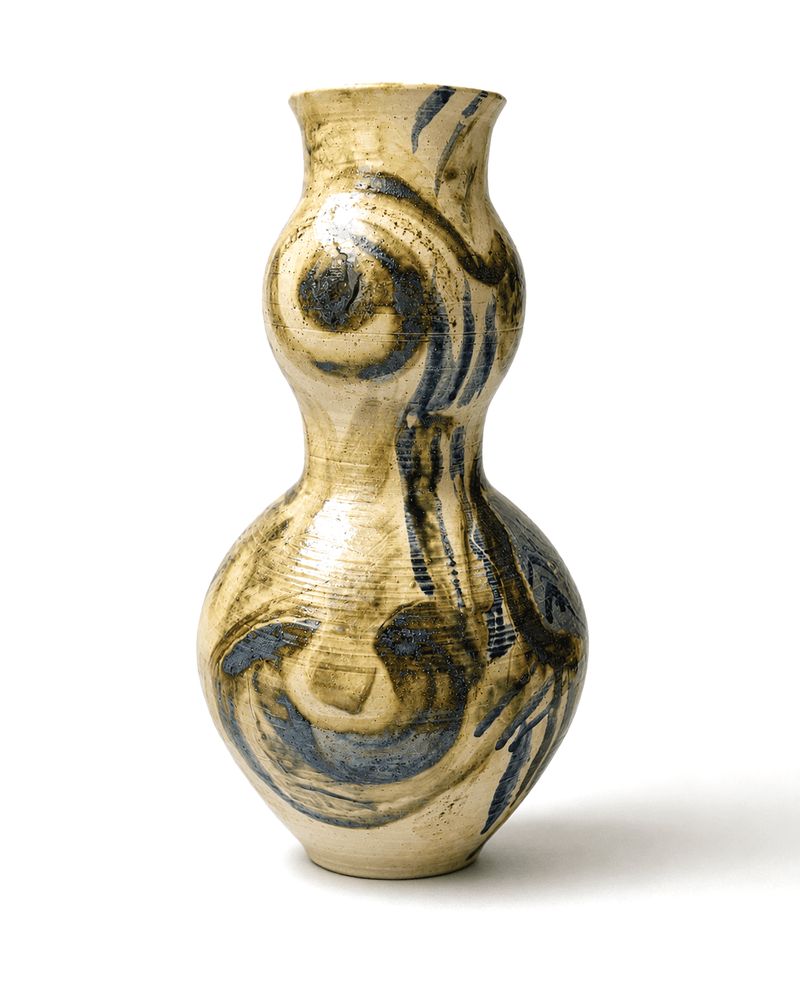
Vase Calabash2026 — 40 × 22 × ⌀ 8 cm
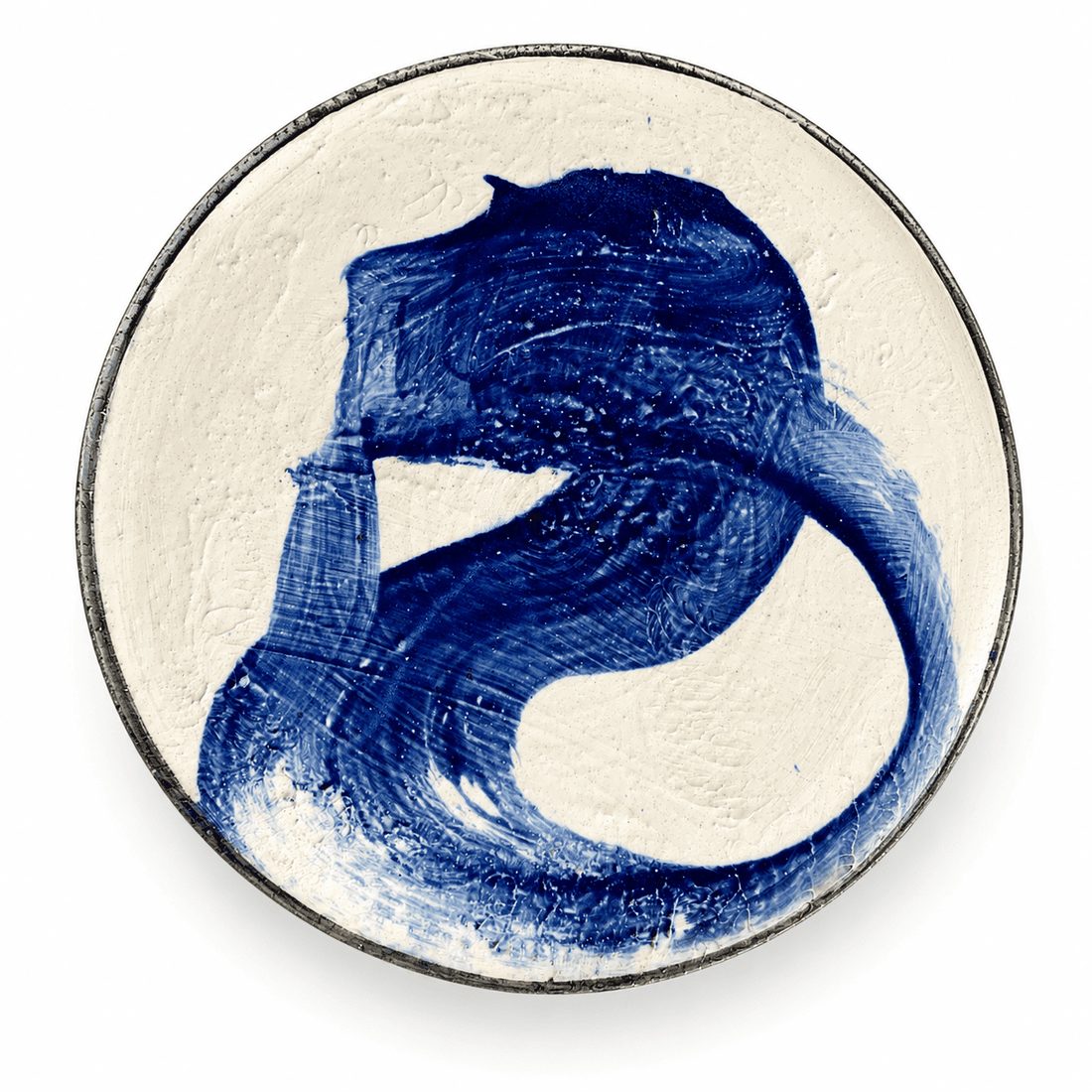
PlateCobalt blue & cream
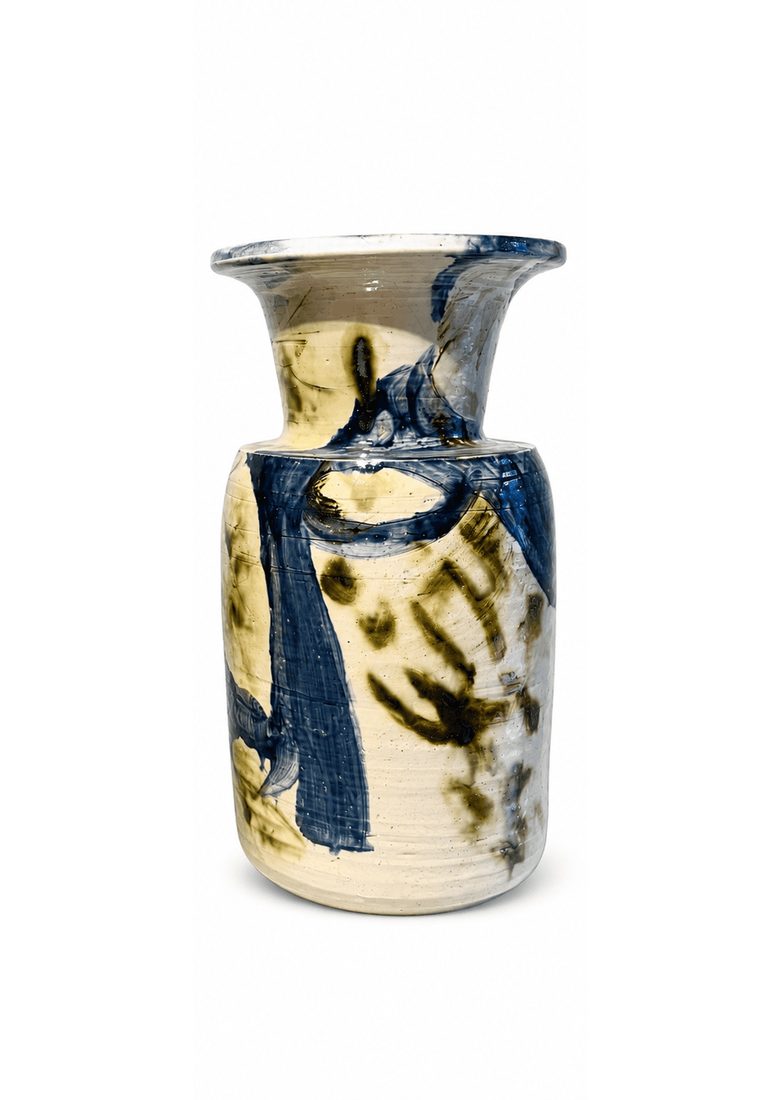
Vase ChinaH 36 × L 21 × ⌀ 12 cm
Signature Pieces
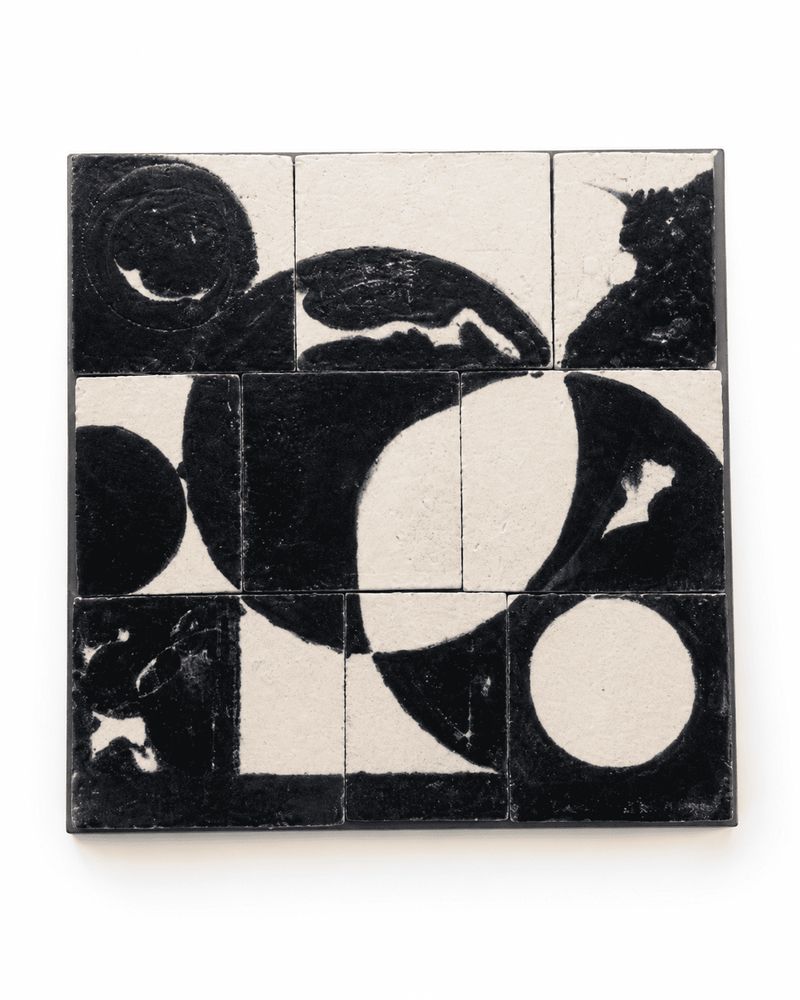
A composition conceived at the scale of a room
Nine painted ceramic tiles, black and deep blue glaze on a cream ground, assembled into an abstract composition with broad gesture — a "false square" where each tile, slightly different in size, follows the logic of a painting rather than a strictly regular geometry. Conceived as a tabletop, the piece goes beyond the merely functional object: it reads as a painting built in ceramic.Set on a wrought-iron base
The tiled composition becomes a tabletop: set on a black iron structure with arched lines, it reads as a coffee table in its own right — as much a piece of furniture as a work of art.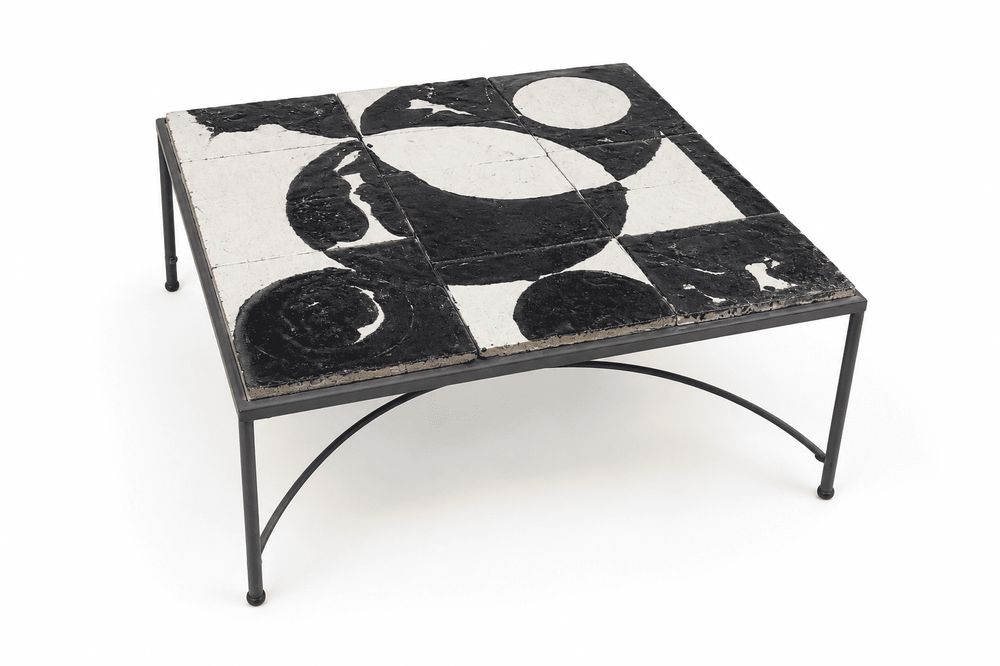
The "Anatole" series
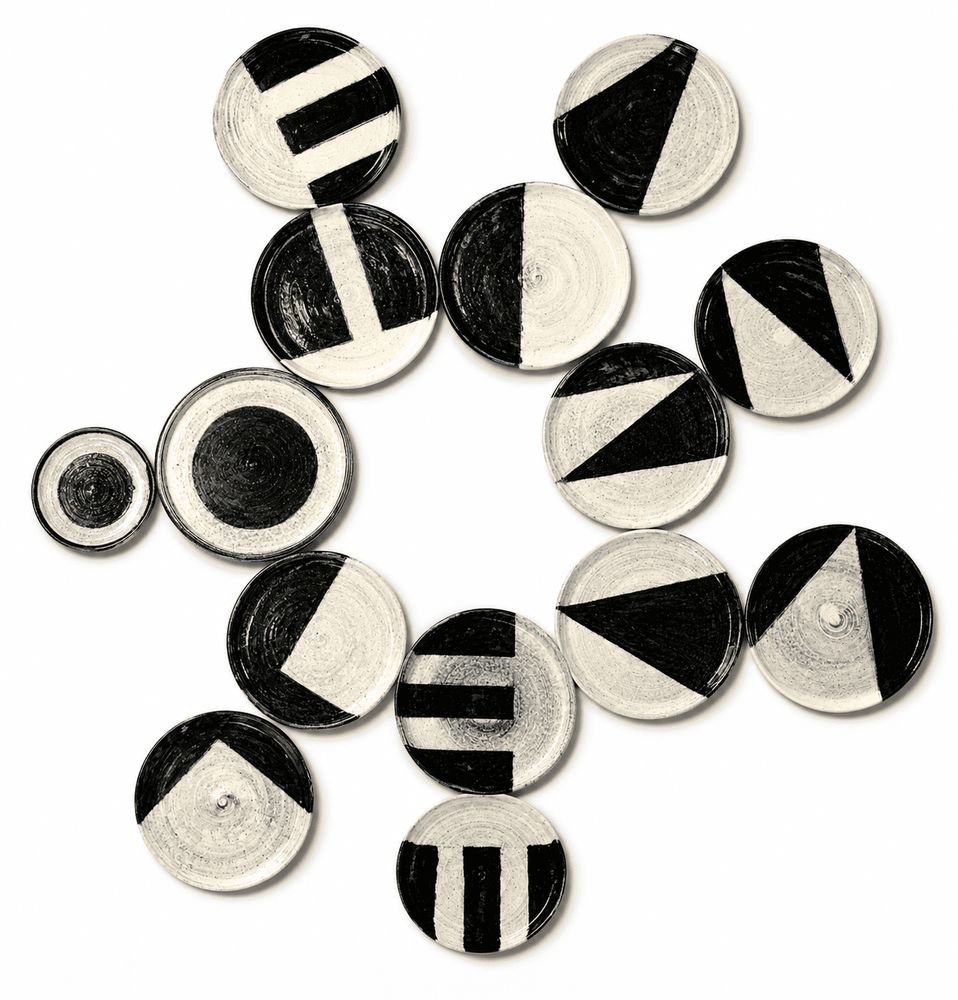
A set of thirteen stoneware plates and small bowls, each painted with a graphic black-and-white motif — stripes, triangles, concentric circles — varied piece by piece, never repeating. Together, they form a wall constellation; individually, each remains a self-contained piece. The series, named "Anatole", extends the abstract vocabulary of the tiled table into a more intimate format, conceived for hanging as much as for the table.The pagoda vases
A double-ribbed silhouette, thrown then reworked by hand to accentuate the flare of the three stacked tiers — a tiered form recalling the architecture of a pagoda. The glaze, cobalt blue marbled over a cream slip, lets the clay show through in places, following the same in-house oxide research as the rest of the studio.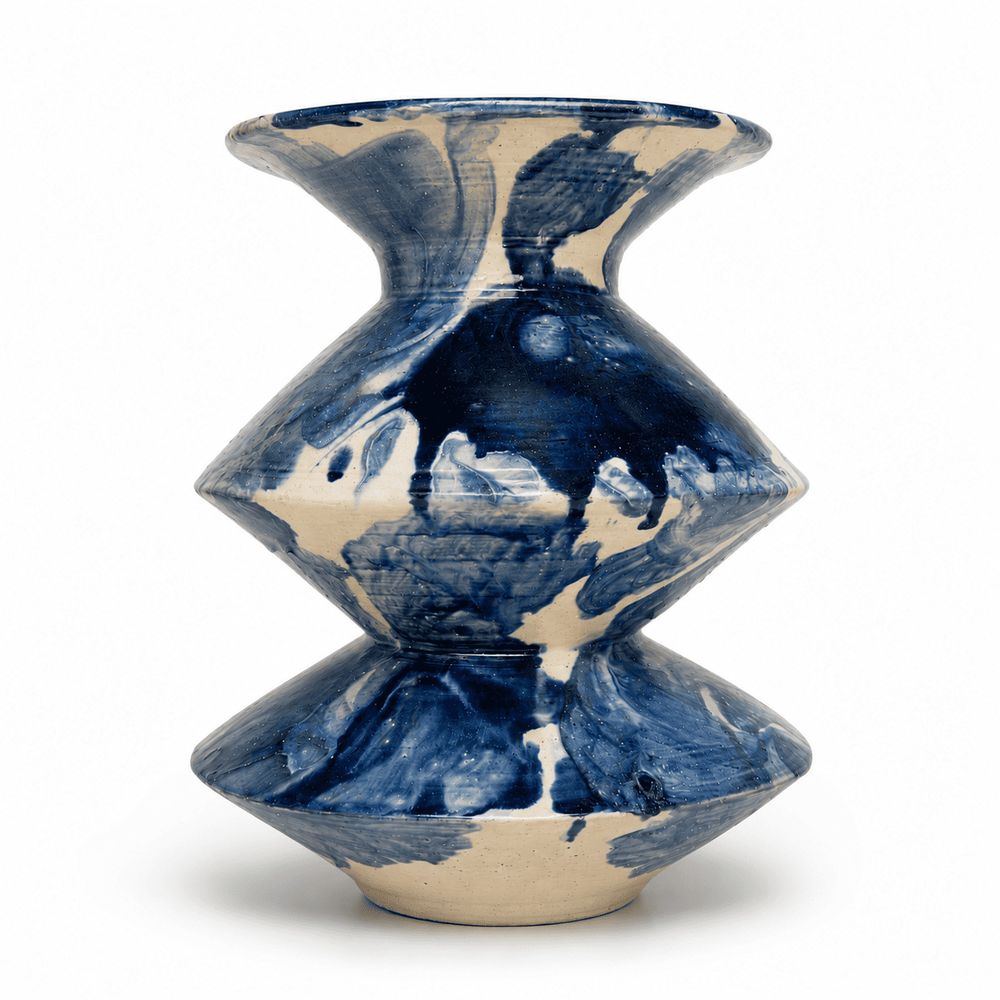
The tripod vase
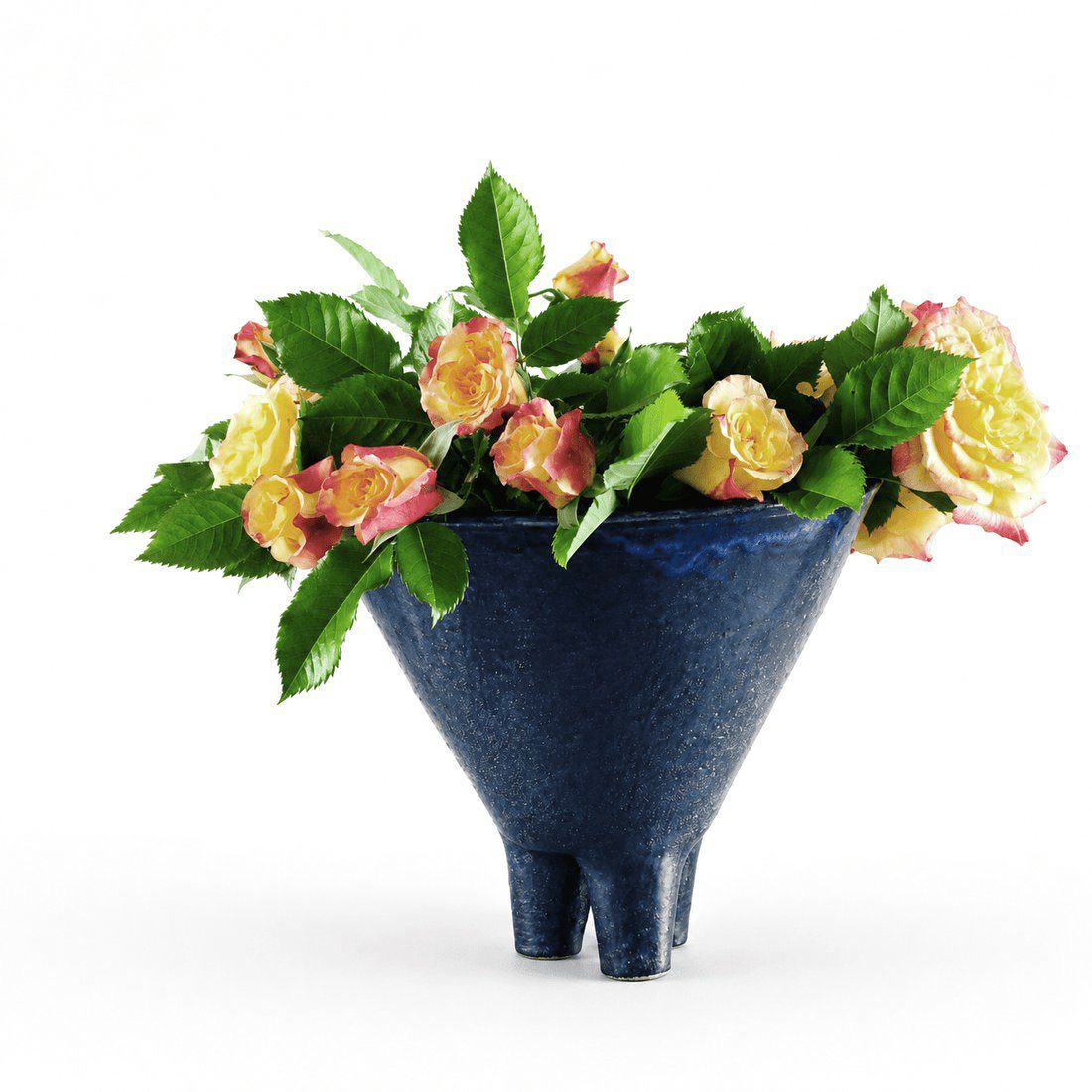
A wide conical basin, flared like an inverted funnel, carried on three sculpted feet that punctuate the base and anchor the piece to the ground. The speckled cobalt blue glaze absorbs the light and gives the object a sculptural presence, without ever receding behind the floral compositions it holds.The teapot with the thrown handle
A hollow handle, thrown in a single gesture into an almost complete ring, in counterpoint to the fine spout and rounded body. The black glaze, heavily textured, almost volcanic, lets the cream slip and its oxides show through in places — a play of raw material that echoes the clean gesture of the handle.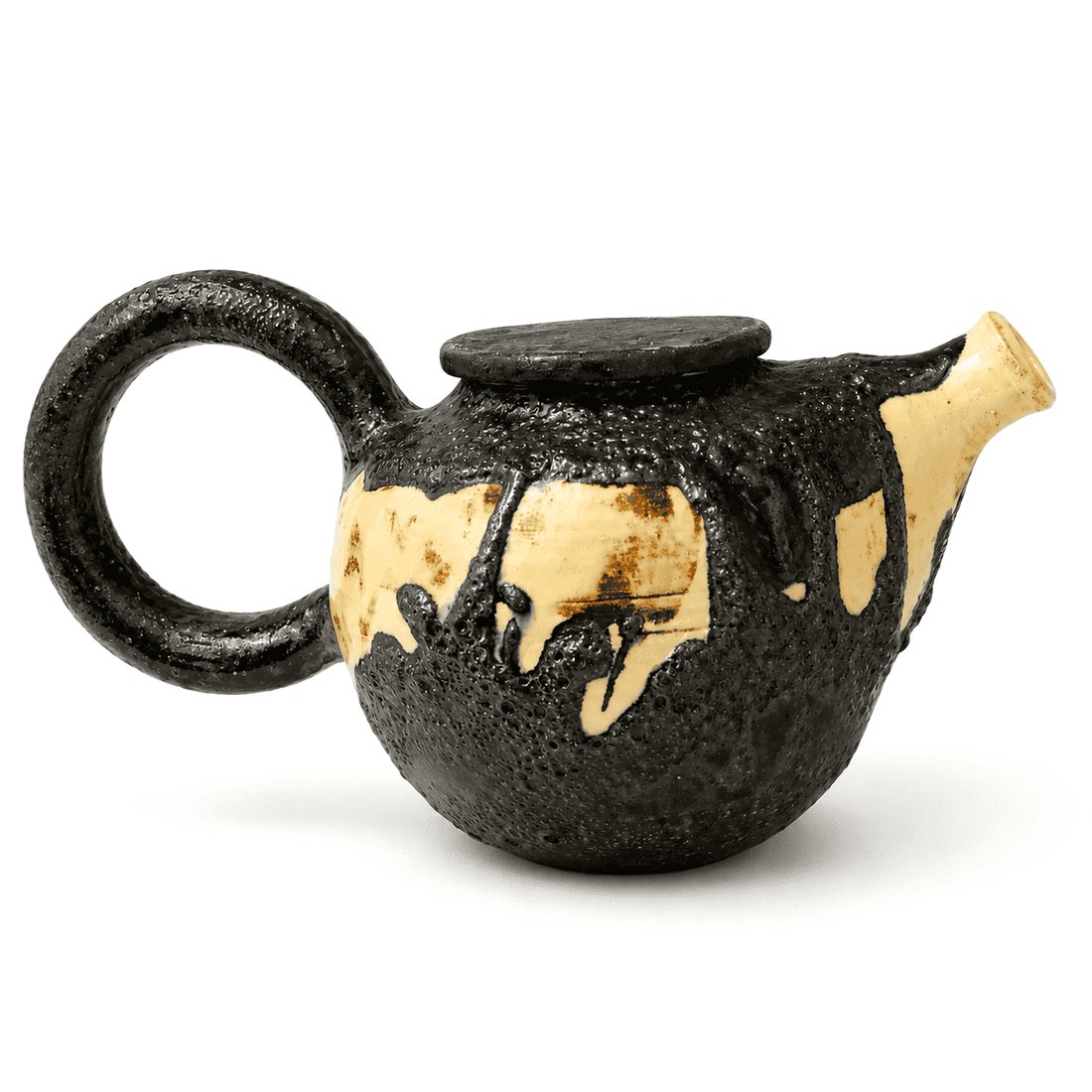
Collections
Nelly Bonnand's work is held in luxury houses, reception venues and private collections.
Houses & venues
- Louis VuittonLisbonne, Berlin, Zurich, Monaco, Nice, Paris
- ZimmermannAmsterdam, Paris, Monaco, Venise, Taormina, Florence, Barcelone, Abu Dhabi, Dubaï, Chengdu, Sydney, Melbourne
- Hôtel de GallifetAix‑en‑Provence — « HANDMADE, le Sud mis en scène », 2021
- Hôtel Cheval BlancSaint‑Barthélemy — Jacques Grange selection
Pieces acquired for retail, reception and representation spaces.
Private collections
- Terry de GunzburgPrivate collection
- Manifesta (Céline Melon)Private collection
- Pascal MarzianoPrivate collection
- Alain CervantesCollector — "Légendes céramiques", Château de Menthon, 2023
- Alain CapdeviellePrivate collection
- Jean Marie AlgoodCollection particulière
Pièces réunies dans des collections particulières, en France et à l'international.
03
Press
A selection of articles devoted to the work and the studio.
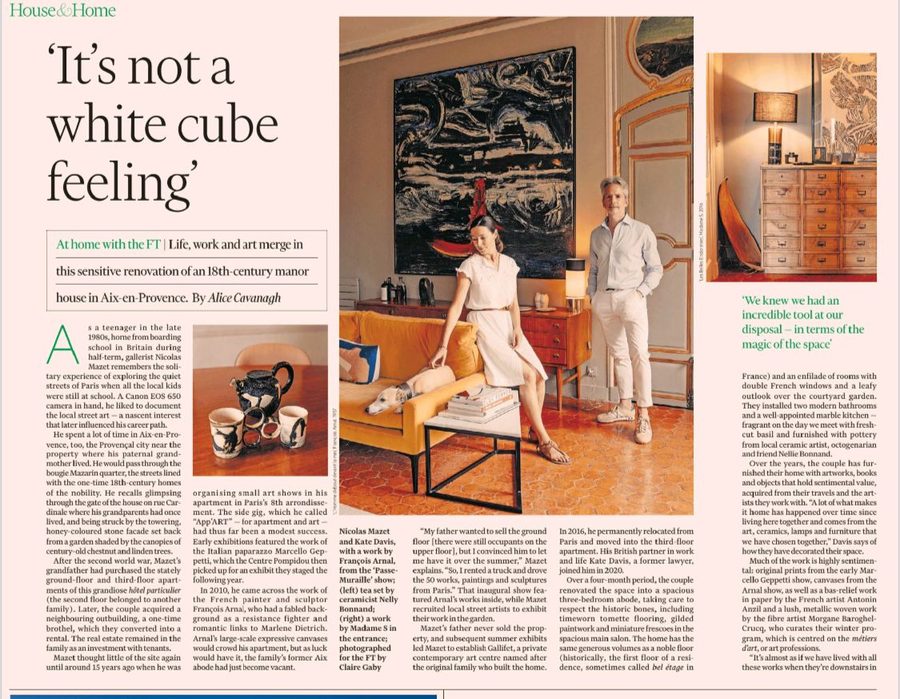
Financial Times — Alice Cavanagh, août 2024
Read the article →
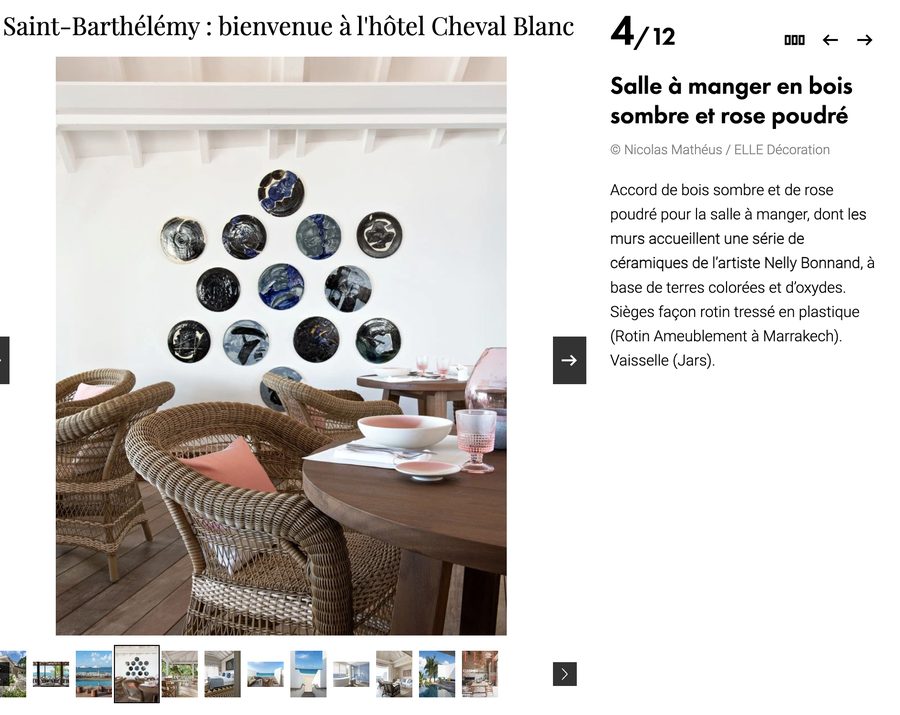
ELLE Décoration — « Saint-Barthélemy : bienvenue à l'hôtel Cheval Blanc »
Read the article →
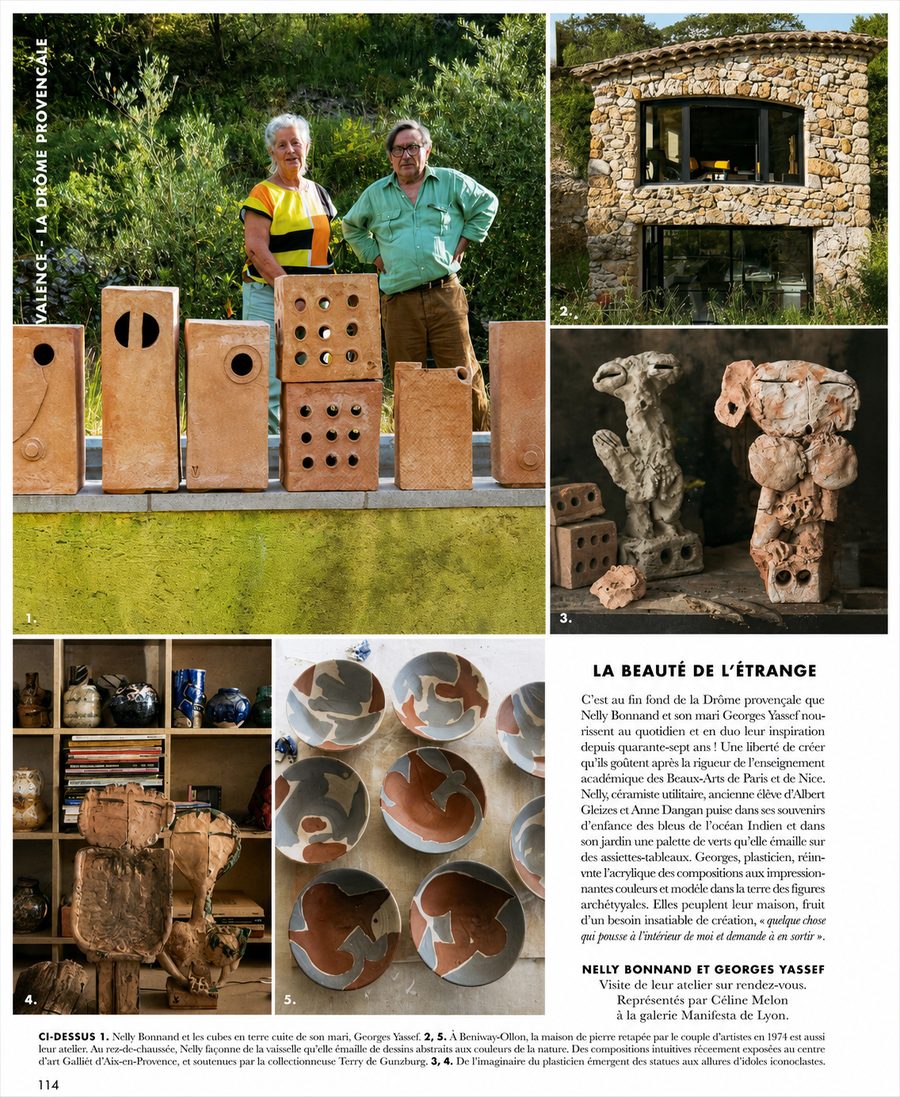
Côté Sud, n° 191 — « La beauté de l'étrange », octobre‑novembre 2021
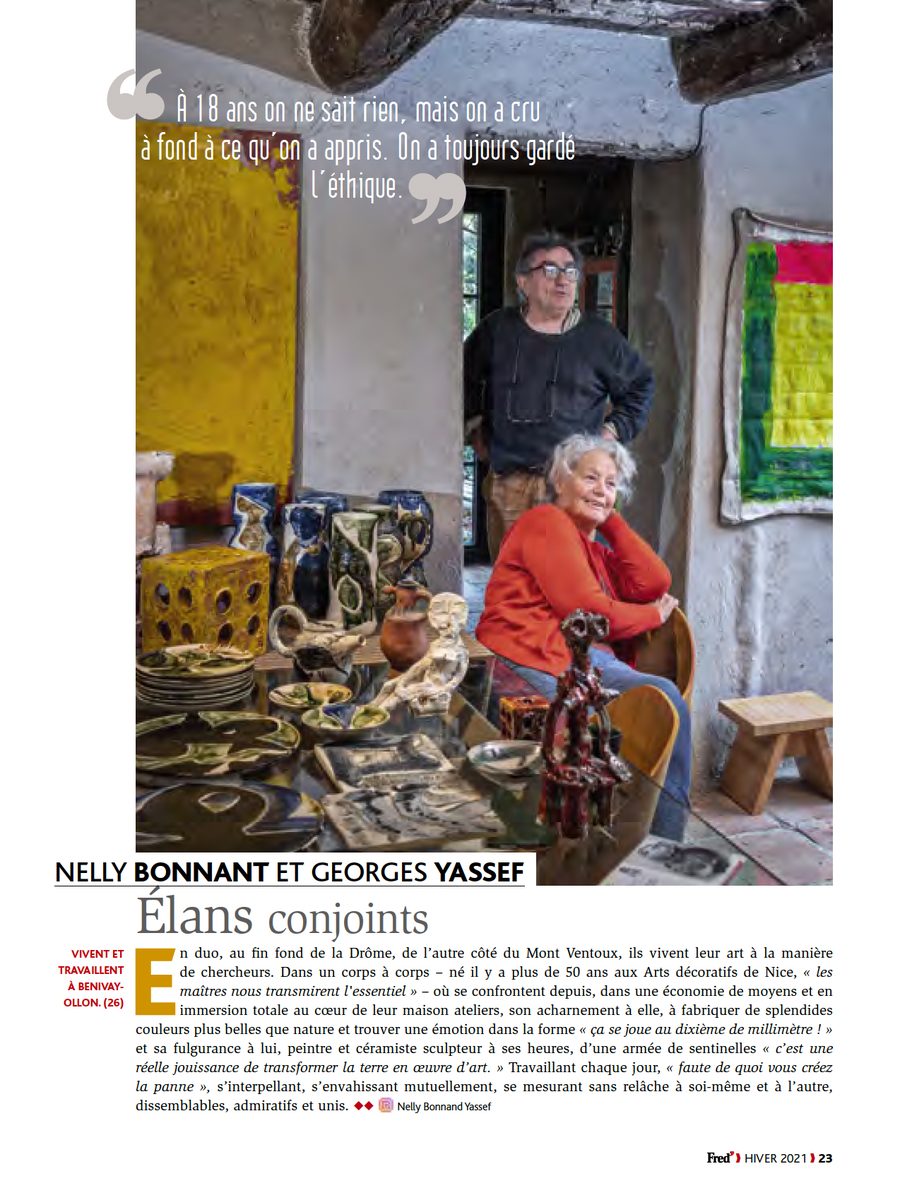
FRED, n° 8 — « Élans conjoints », hiver 2021
View the magazine →
Studio open by appointment
For collectors, decorators and institutions — for any acquisition, loan for an exhibition, or professional enquiry. Write to the studio →Studio
Les Trois Tilleuls
Address
Bénivay‑Ollon, 26170, France
Email
yassefnellygeorges@gmail.com
Phone
+33 6 17 80 75 55
+33 6 09 09 32 04
+33 6 09 09 32 04
Visits
By appointment